
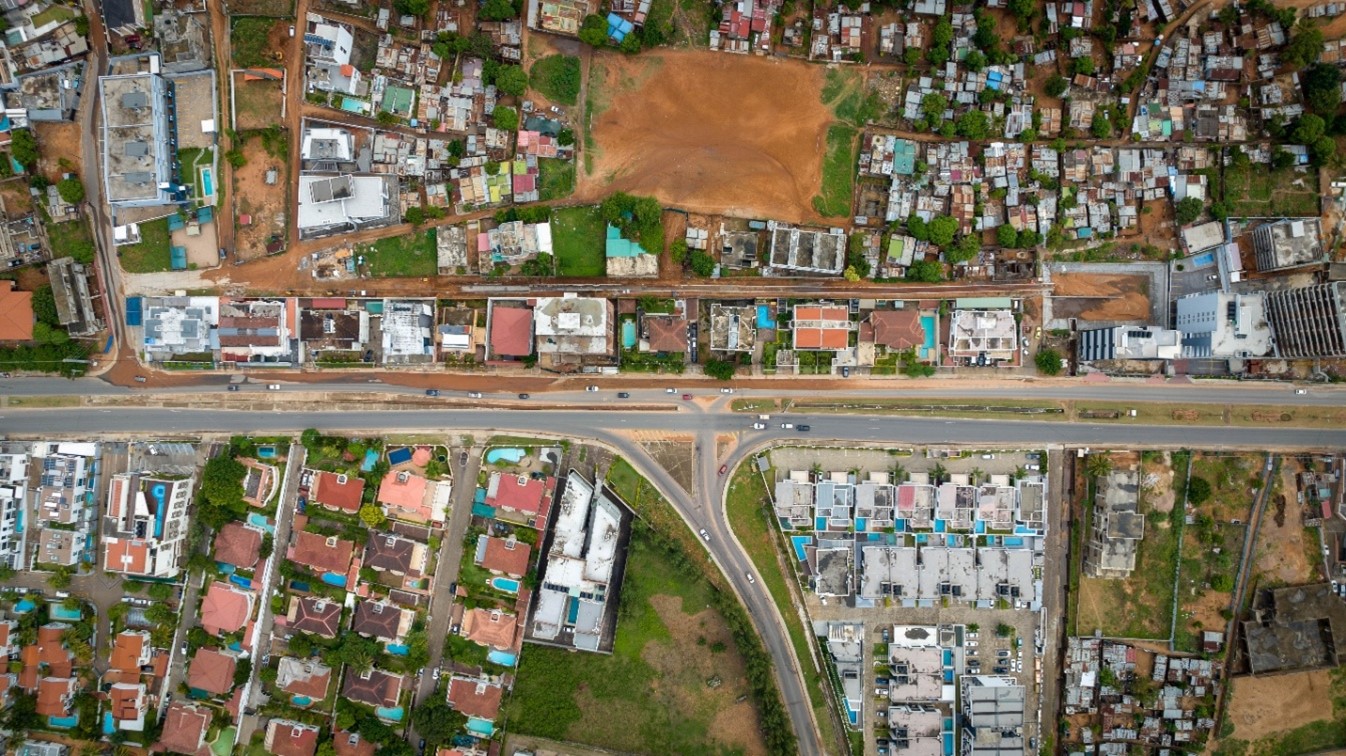
One of the main challenges in Southern Africa is the rapid proliferation of informal settlements in large urban areas, resulting in consequences such as the expansion of the informal economy, increasing inequalities, and growing pressure on infrastructure and essential public services. In many cases, the lack of territorial planning and formal access to land — also in relation to the DUAT system (Right to Use and Benefit from Land) – limits investments in adequate infrastructure and safe housing.
In Maputo, where informal settlements represent a significant part of the urban fabric, the insufficiency of drainage systems, sanitation networks and water supply infrastructure increases vulnerability during the rainy season, leading to recurring flooding and the spread of water-borne diseases such as cholera.
To address these challenges, the infrastructure and urban development sector of AICS Maputo collaborates with the Government of Mozambique, particularly with the Ministry of Public Works, Housing and Water Resources, to improve stormwater drainage and strengthen urban resilience in several neighbourhoods of the capital city. Interventions include the construction of 14 kilometres of drainage systems and the paving of more than 8 kilometres of roads in the KaMaxaquene district.
The sector also promotes innovative initiatives in the field of waste management and sustainable urban development, including the construction of the first decentralised composting centre in the Greater Maputo metropolitan area. In the Chamanculo C neighbourhood, infrastructure interventions aimed at improving the living conditions of the local population are also underway.