
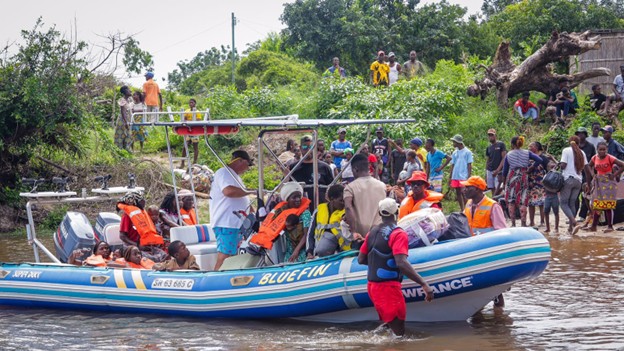
The floods currently affecting Mozambique have already impacted more than 700,000 people since 7 January (data as of 1 February), leading to the rescue of nearly 20,000 people and causing significant damage to essential national infrastructure, including the closure of National Road No. 1 (N1) between the provinces of Maputo and Gaza.
In Marracuene, the overflow of the Incomati River has disrupted road circulation between the town of Marracuene and the tourist area of Macaneta, which is supported under the A-GEO programme, funded by Italian Cooperation.
Of the 18 lifeguards trained under the programme, 11 have taken part in search, rescue, and assistance operations for affected communities, particularly in the districts of Manhica, Boane, and Marracuene, among the areas most severely impacted by the floods. Equipment donated through the project, especially jet skis, has also been used to support these operations.
Elias Novela, one of the lifeguards trained under A-GEO, says he is “proud to be able to help my own community,” adding that “we have already rescued children in distress, persons with disabilities, and elderly people with no hope.” He also stressed that the training he received enabled him “to learn how to think quickly and act in time to save human lives.”
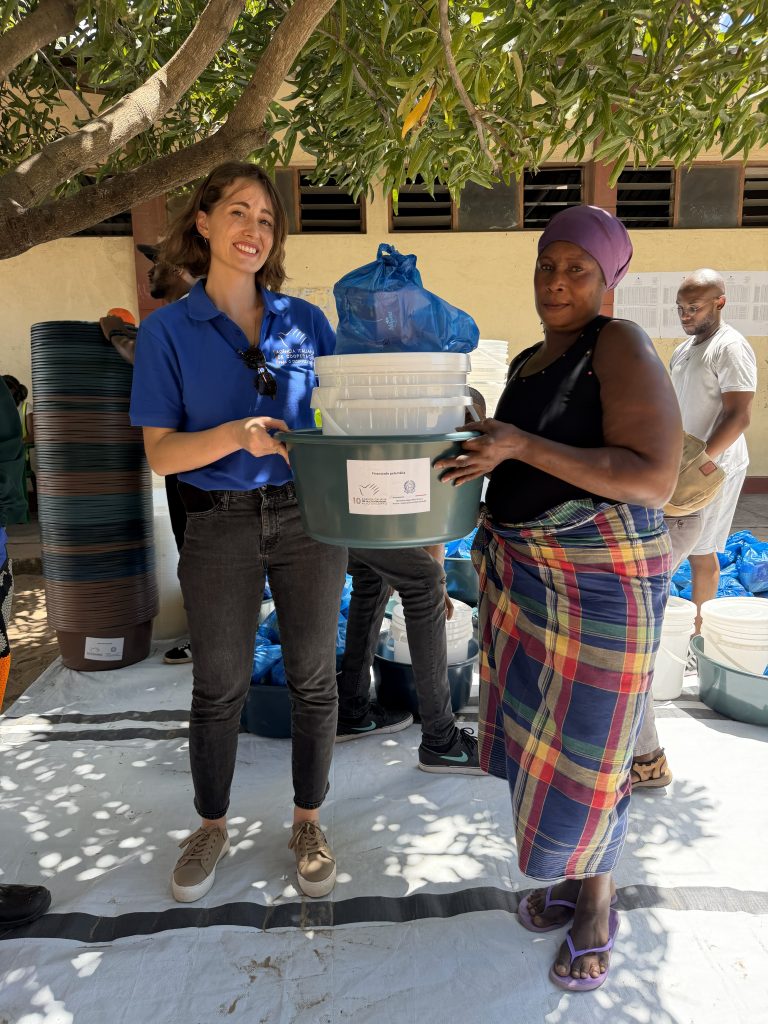
Giulia Natali (AICS – Health) during the distribution of hygiene kits to the Magoanine community, affected by the floods.
On Friday, 30 January, the Ambassador of Italy to Mozambique, Gabriele Annis, together with representatives from the health sector, visited the reception centre in the Magoanine neighbourhood, providing support to communities hosting people displaced by the floods. In one of the most affected areas, 135 hygiene kits were distributed, including water purifiers, with the aim of preventing infectious diseases such as cholera.
In Manica Province, a seed package consisting of 1,500 kg of maize and 600 kg of beans was delivered to support farming families affected by heavy rains and flooding. The donation falls under the programme to strengthen the resilience of the most vulnerable communities in the provinces of Zambézia, Manica, and Tete.
It is also important to highlight that, through the Ready2ACT programme, funded by Italian Cooperation, the CIMA Foundation is providing remote support to technicians from the National Institute for Disaster Risk Management and Reduction (INGD) and other competent institutions within the early warning system, such as INAM and DNGRH, supporting monitoring and analysis operations through forecasting and advisory tools developed under the project, including the new operations room inaugurated last year.
In parallel, under the European Union Civil Protection Mechanism activated for this emergency, the arrival in the country of a flood management expert from the CIMA Foundation is expected, as part of the European Union’s contribution to support risk management.
According to Paolo Enrico Sertoli, Head of the AICS Office in Maputo, “we know that Mozambique is one of the countries most affected by climate change. In recent years, through projects such as Ready2ACT, we have invested strongly in risk management and in strengthening early warning systems, relying on the know-how of the CIMA Foundation and the Italian Civil Protection Department. We also acknowledge the essential role played by lifeguards trained under the A-GEO programme in safeguarding human lives and supporting communities. Italy and Italian Cooperation will continue to do everything possible to support the Mozambican population.
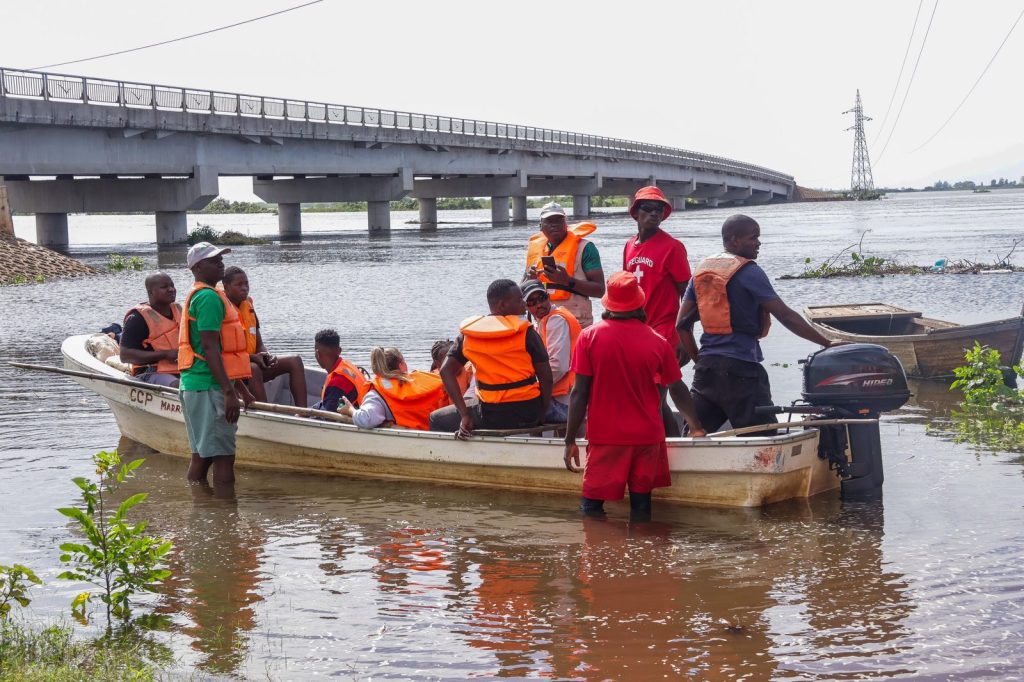
Lifeguards trained under the A-GEO project during search and rescue operations.