
From September 27 to 30, the Director of the Italian Agency for Development Cooperation (AICS), Marco Riccardo Rusconi, carried out a mission to Mozambique, during which he visited several projects supported by the Italian Cooperation.
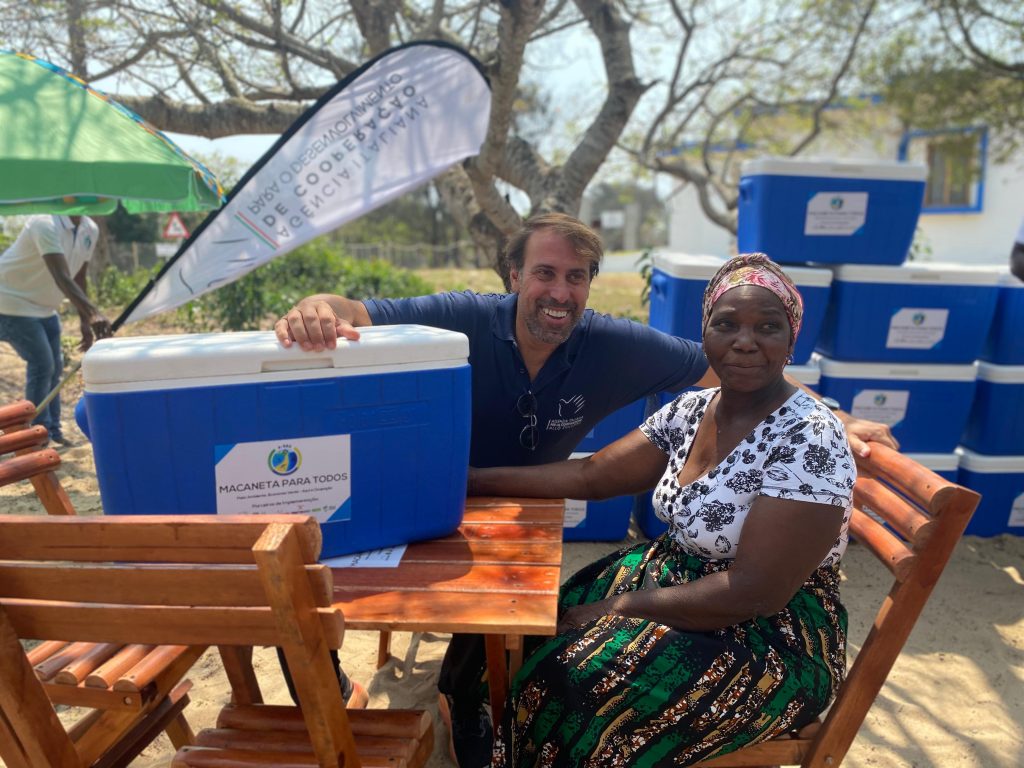
Accompanied by the Head of the Maputo Office, Paolo Enrico Sertoli, the Director visited the Municipality of Marracuene, where he became acquainted with the activities of the A-GEO project – Environment, Green/Blue Economy and Employment – which, thanks to Italian funding, has transformed Macaneta into the country’s pilot beach.
During the visit, Rusconi observed aquaculture activities promoted by a local association, which had already benefited from the distribution of 19,750 fingerlings to the Hobjana Association. He also visited the four lifeguard towers and attended a practical demonstration conducted by the 18 lifeguards trained under the project. Together with the President of the Marracuene Municipal Council, Shafee Sidat, he discussed prospects for future collaboration, including the construction of new infrastructures to support local development, such as a police station or a fish market.
The mission also included an important institutional moment with the inauguration of the new Operations Room of CENOE, implemented under the Ready2Act programme. The initiative is led by the National Institute for Disaster Risk Management and Reduction of Mozambique (INGD) in partnership with the CIMA Foundation, in collaboration with WeWorld, and with the strategic support of the Italian Civil Protection Department.
Mozambique is among the most climate-vulnerable countries in Africa, as demonstrated by past cyclones such as Idai, Kenneth and Freddy. “Thanks to this new facility, the country is now better prepared to coordinate responses to climate and humanitarian emergencies. Integrated within the national civil protection system, this Operations Room strengthens Mozambique’s capacity to forecast, alert, and respond in a coordinated manner to emergencies,” Rusconi commented.
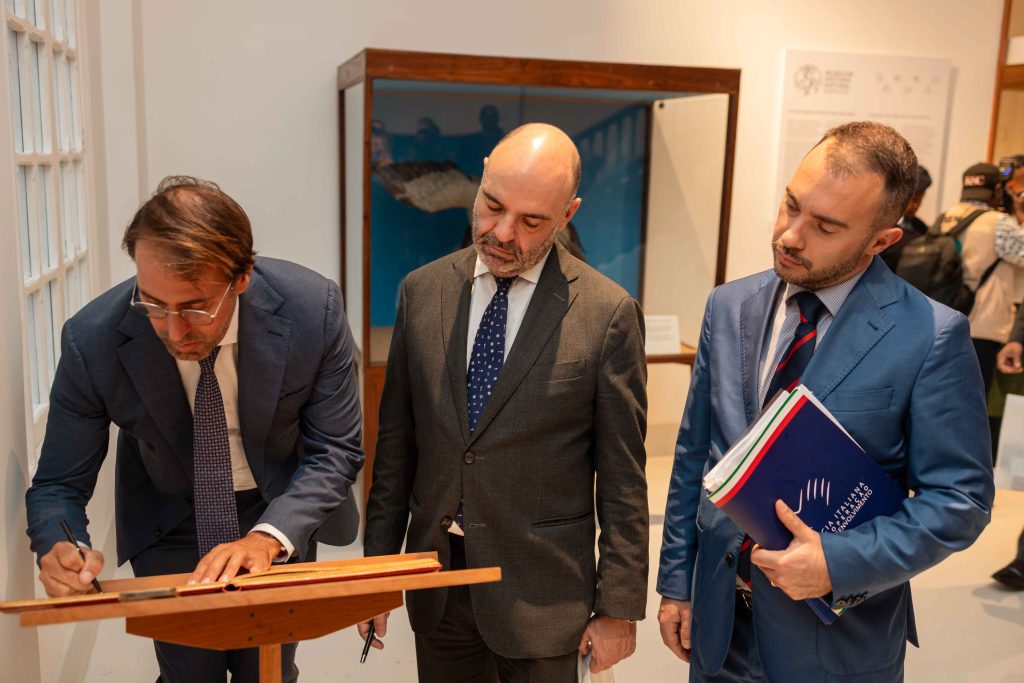
The mission also featured a significant moment for the promotion of cultural and scientific heritage: the reopening of the Natural History Museum of Maputo, a historic building in the capital founded in 1911 and closed in 2023 for rehabilitation works, carried out thanks to a €4,250,000 investment under the RINO programme, specifically dedicated to its enhancement.
The Museum’s collections stand out for their extraordinary scientific and patrimonial value: among the most remarkable exhibits are more than 200 mammals, 10,137 birds, 176,527 insects, 1,250 invertebrates and 150 taxidermied reptiles. Alongside this unique collection, the renovated Museum includes new thematic areas, such as an ethnographic hall featuring around 500 objects related to the cultural practices of Mozambique’s diverse peoples – art, sculpture, music, goldsmithing, pottery and basketry – complemented by a historical photographic archive.
In his address, Director Rusconi emphasized that “Mozambique now has a renewed and modern Natural History Museum, designed for the future of research and conservation. The Italian Cooperation is proud to have contributed to this achievement and reaffirms its commitment to science, education, and sustainability.”
During his stay, the Director also met with the AICS technical team to review the progress of ongoing projects, as well as with GONG – the umbrella organization coordinating more than 36 civil society organizations in the country. He also held meetings with representatives of the private sector, such as ENI, and with the academic community, including Sapienza University of Rome and the CIMA Foundation. Finally, he met with the Dom Bosco Institute to explore possible future collaborations.
Commenting on the outcomes of the mission, Rusconi stated: “Mozambique is a priority country for the Italian Cooperation, which has been present here for half a century, and for the Mattei Plan. We are working to implement ambitious projects as quickly as possible, involving civil society, Italian technical excellence, the private sector and academia. In this way, we aim to present ourselves to our Mozambican friends as comprehensive partners.”