

Amadbay Gulamo Assane, from Búzi District in Sofala Province, is the overall winner of the “Capulana is Life” competition, an initiative that combines art and public health and clearly highlights the central role of Italian Cooperation and the Ministry of Health of Mozambique in promoting cervical cancer prevention. 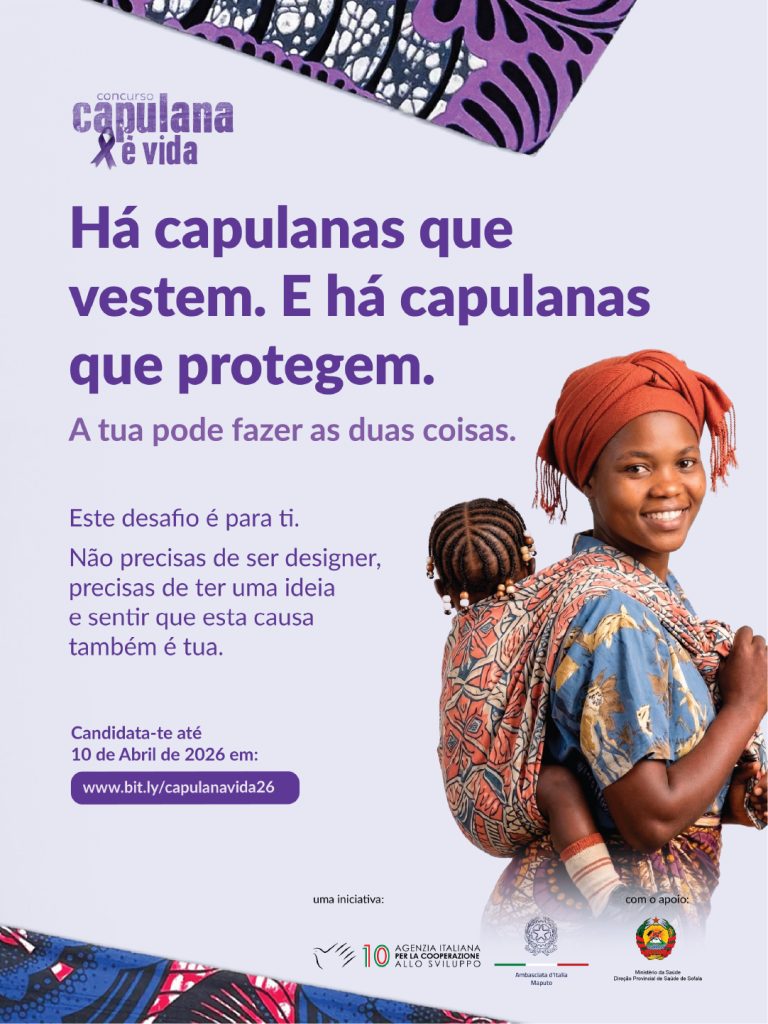
The winning work, entitled “Africa Cries”, was selected by an institutional jury and the public, standing out for its strong symbolic and social significance. The capulana portrays the silent suffering associated with cervical cancer while conveying a message of strength, hope and unity among women.
Dominated by the colour purple — a symbol of the fight against this disease — the piece features three circles and the figure of a woman holding the word “Life”, in reference to the competition’s slogan. In a clearly visible central band, the message reads: “Prevention is the best way to fight cervical cancer”.
As a prize, the winner took part in a workshop in Maputo, held at the atelier of fashion designer Amirah Adam, where he developed the final version of the capulana. He also received a cash prize of 10,000 meticais.
The award ceremony took place at the Casa do Artista in Beira on 29 April, where the Chief Medical Officer of Sofala Province, Edgar Meque, reaffirmed the commitment of the Ministry of Health of Mozambique to the fight against cervical cancer. Key strategies highlighted include expanding access to screening services, strengthening HPV vaccination, and intensifying education and awareness-raising activities within communities.
For her part, the Acting Deputy Director of the Italian Agency for Development Cooperation, Maria Cristina Pescante, underlined the decisive role of Italian Cooperation in supporting concrete and ongoing interventions in Mozambique. According to her, these initiatives promote vaccination as an essential protective measure, encourage regular screening for early detection, and ensure treatment support when necessary, contributing to an integrated and effective response in close coordination with the Ministry of Health of Mozambique. 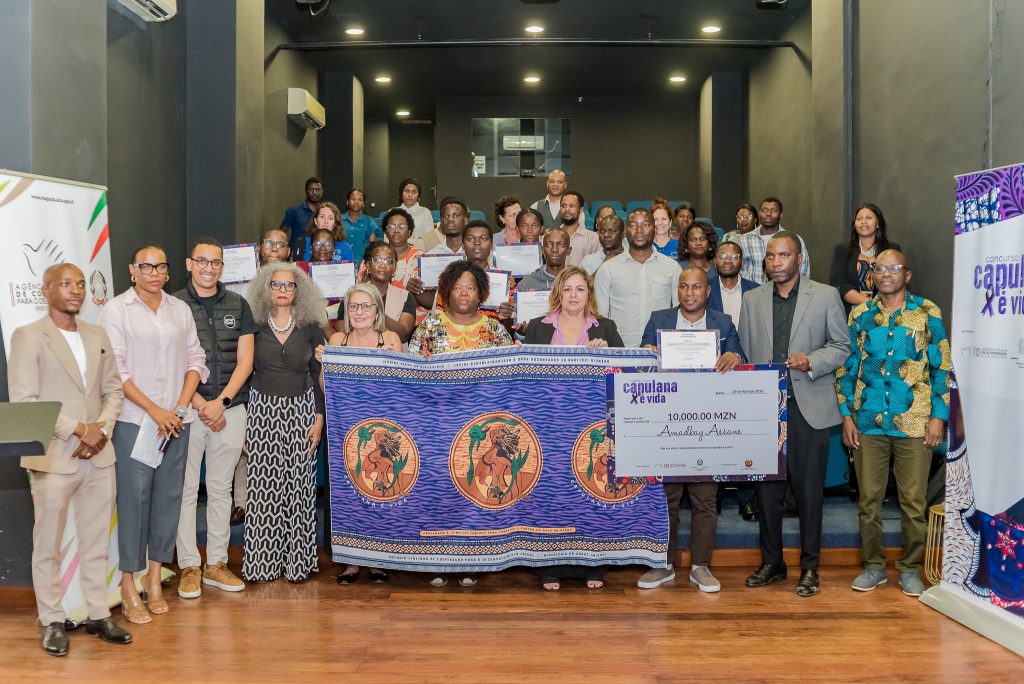
In a particularly emotional moment, artist and cultural activist Sónia Sultuane highlighted the symbolic power of the capulana:
“As ambassador for this cause, I look at the capulana — which we knot on our chest, at the curve of the hip and in the warmth of our arms — and I see hope in it. Cervical cancer has silenced our women, not due to a lack of strength, but due to a lack of voice. Many pass away because knowledge arrives too late. We want to embroider on cloth and in the soul: ‘You matter, take care of yourself’.”
Launched in Beira on 23 March by the Italian Ambassador, Gabriele Annis, the “Capulana is Life” competition received more than 50 entries, of which 30 were deemed eligible. The selection of the winner resulted from a combination of public voting on social media and assessment by an institutional jury.
Promoted by Italian Cooperation, in direct partnership with the Ministry of Health of Mozambique and provincial health authorities, the initiative aimed to involve young people in creating awareness messages on cervical cancer prevention. As part of the “Prevention and Control of Non-Communicable Diseases” project, the campaign used the capulana — a strong symbol of Mozambican cultural identity — as a medium for public health communication.
The campaign reinforces two main prevention measures jointly promoted by Italian Cooperation and the Ministry of Health of Mozambique: vaccination of girls against HPV, the main risk factor for the disease, and regular screening of women from the age of 25, essential for early diagnosis and treatment of pre-cancerous lesions. 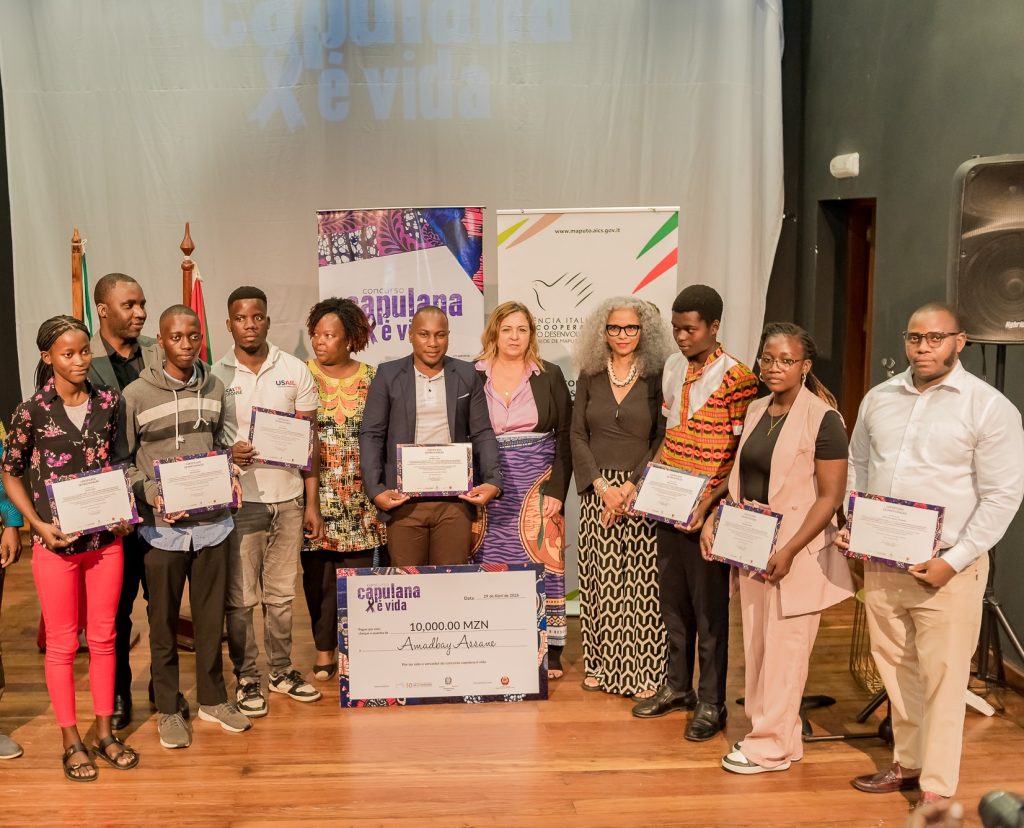
Beyond its health dimension, the competition also paid tribute to figures in Mozambican journalism such as Maria de Lurdes Torcato, Ofélia Tembe and Suzete Honwana, who contributed to elevating the cultural value of the capulana. In her book Capulanas & Scarves, Torcato notes that although it has external origins, the capulana has become deeply Mozambican, functioning as a medium of cultural expression that “speaks” through its patterns, reflecting social, political and cultural events.
With this initiative, it is hoped that the winning capulana will amplify its message, uniting culture and public health. The “Capulana is Life” competition thus reaffirms the strategic role of Italian Cooperation and the Ministry of Health of Mozambique in promoting community well-being, consolidating a strong partnership between Mozambique and Italy in the fight against cervical cancer.