A Water Revolution: Malimanao Community Celebrates the Restoration of the Water Pump

In the heart of the Malimanao community, in the administrative area of Nhamagua, an extraordinary celebration took place yesterday, marked by the official delivery of the restored water pump into the hands of António Dinis, the district administrator of Macossa, in Manica province. The event represented a significant step towards ensuring sustainable access to clean water for all members of the community.

António Dinis expressed deep gratitude to the DELPAZ Program, which actively supported the rehabilitation process of the water pumps. “We are very grateful to the DELPAZ Program for providing valuable support in the rehabilitation of our pumps. This will significantly contribute to the well-being of our communities,” stated the administrator. He also emphasized the importance of the community now taking responsibility for the maintenance and wise use of this vital resource.

The ceremony witnessed the delivery of an Afridev-type water pump, one of the seven recently restored by the DELPAZ Program. Rosita Panazache, representing the Malimanao community, shared her joy in finally seeing water easily accessible. “Now we can save time as it will no longer be necessary to travel long distances to fetch water from traditional wells,” she exclaimed.

Pedro Paunde, the community spokesperson, highlighted the importance of the pump not only in facilitating water access but also in disease prevention. “Water not only nourishes us but protects us from diseases. I appeal to all communities to enjoy the privilege of having their own water pump,” he declared.

The event was made even more special by the presence of Carlos Mairoce, representative of the Italian component of the DELPAZ Program, and Paolo Gomiero, representative of the NGO Helpcode. Sofrimento João Francisco, director of the Serviço Distrital de Planeamento e Infra-estruturas (SDPI), emphasized the commitment to sustainable development and the importance of infrastructure for community progress.

This celebration not only marks a significant step forward in providing safe and accessible water but also serves as a tangible example of how collaboration between organizations and communities can bring meaningful change for the benefit of all. A testament to hope and progress for the people of the Malimanao community and an inspiration for many other communities to pursue a better life through access to clean water.


Dreaming big in the middle of the mato

In the heart of Guro district lies the administrative post of Nhamassonge. It is a land of around eleven thousand inhabitants, known by the name it inherited from the massonge, small cucumbers with spiky skins that grow resiliently in that hot, dusty soil dotted with centuries-old baobab trees.

It is here that Carlitos Eusébio Zondane lives, a 35-year-old man whose life is made up of work, dreams and persistence.

At the side of the main road, very close to the administrative post headquarters, alongside others, stands his stall — simple, yet full of life. There, Carlitos sells soft drinks, small food items and the traditional malambe (baobab fruit). At the same time, he performs another essential role for the community: he is an E-mola agent, facilitating transactions and connecting people in an increasingly digital world.

But Carlitos did not stop there.

Driven by a broader vision, he decided to learn a new profession. In 2024, he was selected for a training course promoted under the DELPAZ programme, in cooperation with district authorities, as part of local economic development. It lasted only two weeks but was intense — enough time to awaken a new vocation in him. He became a mechanical metalworker.

The choice was not accidental. In his region, there was no mechanical metalworker. Where many saw a limitation, Carlitos saw an opportunity.

Recently, he took another step: he opened his own small metal workshop, powered by energy from solar panels installed in the village. For Carlitos, every piece he works on represents not only income, but also pride.

His determination has taken him further than he ever imagined. For the first time, he boarded a plane bound for Maputo. There, in November 2025, he took part in a conference organised by the Institute for Multi-Party Democracy (IMD), a DELPAZ partner. He keeps the photographs from that trip carefully — especially those in which he appears alongside Dom Dinis Sengulane and Oscar Monteiro. Whenever he shows them, his eyes light up.

“It was wonderful!” he says, unable to hide his emotion.

Despite his achievements, Carlitos keeps his feet firmly on the ground. He pays his taxes and works every day to improve his craft. His greatest wish now is clear: to obtain an official metalworking licence. “I already have the certificate, but I know I need to save some money to get the licence.”

And so Carlitos continues, between the sound of metalwork and the movement of the road, building his future with his own hands. In a place where opportunities are rare, he has become an example of how, with courage and determination, paths can be opened — even in the middle of the mato.


Lurdes, a former combatant who fed a company, now produces to grow her children

Lurdes António, 68, didn’t have access to formal education in her childhood, like most women in rural Mozambique at that time. She was recruited to the Minga base of the Mozambican National Resistance (Renamo) in 1982, at the age of 26. She underwent military training in Mandie, in the district of Guro, in the province of Manica.

At the height of the civil war, she spent time at five military bases belonging to the guerrillas, producing food in the civilian and military fields and cooking for the company, where she later met her husband, also a former guerrilla.

“My job was to carry the soldiers’ luggage and cook for them on their missions. If they told us we were going somewhere, we just carried their luggage and went on, and once the programme was over – whether it was reconnaissance or an attack – we returned. Then they’d send us home and we’d be called up when there was a new programme,” she says.

Drought and severe famine hit Mozambique at the end of the 1980s, and “terrible suffering” shook her company when she and her husband decided to abandon the war and travel to settle in Nhamadjiua, in the administrative post of Nhampassa, in the district of Barué, Manica province, where they were later demobilised with the end of the war in 1992.

“In 2012 we once again answered ‘the call of the revolution’, summoned by the historic leader Afonso Dhlakama,” who had already been denouncing serious flaws in the implementation of the Rome General Peace Agreement (GPA).

Lurdes António was demobilised again with her husband in 2021, as part of the Disarmament, Demobilisation and Reintegration (DDR) process of the former Renamo guerrillas in Barué.

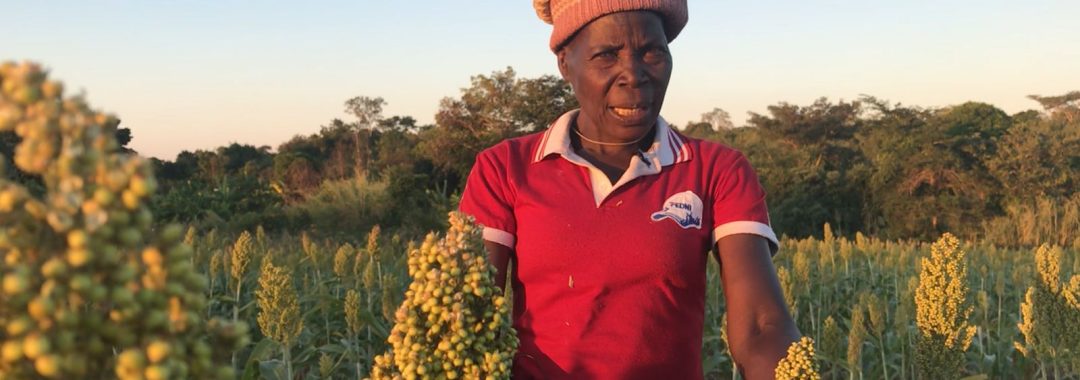
Since then she has dedicated herself to farming and has learned new agricultural techniques introduced with the DELPAZ Programme, which is ensuring the economic and social reintegration of all ex-combatants, their families and rural communities affected by the conflict in order to achieve lasting peace in Mozambique.

“DELPAZ has come and is teaching us. We used to grow crops in a rudimentary way, with traditional seeds, and we had a lot of losses, but now we’re using improved agricultural techniques, we use lines for the pits when sowing, and we already have income to educate our children,” she explains, thrilled with her new achievements.


Investing in women: accelerating progress

On the day on which International Women’s Day is celebrated all over the world, we want to recall the message launched by Amélia Andalusa, from Dunda, Macossa district, in the province of Manica, during the first women’s camp organised by the DELPAZ Programme last November: “Conflict is a trauma for women, in every part of our lives. But now we want to continue to live in peace and we want to be emancipated, to do agriculture, small businesses, raise animals, we also know that there is digital economic emancipation, where we can use our phones to trade”.

This year, in fact, the International Women’s Day 2024 focuses on the crucial theme of ‘Investing in Women: Accelerating Progress’.[i] An opportunity to reflect on the importance of ensuring the rights of women and girls in all spheres of life, recognising that this not only fuels prosperous and just economies, but also helps to preserve a healthy planet for future generations.

The UNWomen report highlights that achieving gender equality in the Sustainable Development Goals requires USD 360 billion per year.[ii] However, the focus must not be limited to increasing funding, but also to reforming institutions at all levels so that the promotion of women’s empowerment becomes a political priority and an essential public investment.

To ‘accelerate progress’, UNWomen emphasises the need to ensure women’s access to financial resources, land, information, and technology. [iii]Promoting decent and sustainable employment, recognising the value of women’s care work, combating gender-based violence and promoting women’s participation in all decision-making processes are key actions.

The DELPAZ programme, an EU-funded Mozambican government programme, managed in collaboration with the United Nations Capital Development Fund (UNCDF), and the Austrian cooperation agency (ADA), and implemented by the Italian Agency for Development Cooperation (AICS) in the Provinces of Manica and Tete, and ADA in Sofala Province, is committed to translating these principles into concrete actions. Working closely with local institutions, DELPAZ promotes investments in public infrastructure to reduce inequalities in access to resources and improve women’s empowerment.

DELPAZ takes an inclusive approach, working on raising community awareness about peacebuilding, social inclusion and combating gender-based violence. And it does so by starting with voices, points of view, the creation of spaces for women – fundamental elements of women’s agency. DELPAZ is also committed to creating self-employment opportunities through vocational training courses and support for micro-enterprise start-ups, with a focus on women’s economic empowerment.

A tangible example of DELPAZ’s commitment is the Solidarity Camp in the Báruè District, Manica Province, organized in November 2023. This collective practice promotes solidarity, inclusion, and diversity, strengthening the role of women as local actors and building their leadership. Through these camps, women actively participate in decision-making processes, identify vulnerabilities and needs, and build concrete alternatives supported by the programme. Thus, we want to celebrate this 8 March 2024 by sharing the Declaration drafted by the women and men who participated in the Solidarity Camp.

On the day, Amélia Andalusa was very clear: ‘We already have our savings group and we need to raise awareness of other women. That’s why we want more camps like this! They should be organised in all districts, replicated and held in the communities, because that’s how we empower women and also men.”

AICS intensifies its efforts through initiatives focused on women’s access to financial resources, land and Information and Communication Technologies (ICTs). Projects such as ‘Coding Girls’ aim to enhance women’s skills, opening up new opportunities for access to decent jobs in ICTs. Furthermore, initiatives such as ‘As Mulheres do SUSTENTA’ contribute concretely to the promotion of equal participation and leadership of women in rural areas.

The commitment of AICS to the DELPAZ Programme, reflects a holistic and targeted approach to addressing gender inequalities, providing concrete and sustainable solutions to ensure the well-being and empowerment of women in 2024 and beyond.

[i]  https://www.unwomen.org/en/news-stories/announcement/2023/12/international-womens-day-2024-invest-in-women-accelerate-progress

[ii]  https://www.unwomen.org/en/digital-library/publications/2023/09/progress-on-the-sustainable-development-goals-the-gender-snapshot-2023

[iii] https://www.unwomen.org/en/news-stories/explainer/2024/02/five-things-to-accelerate-womens-economic-empowerment