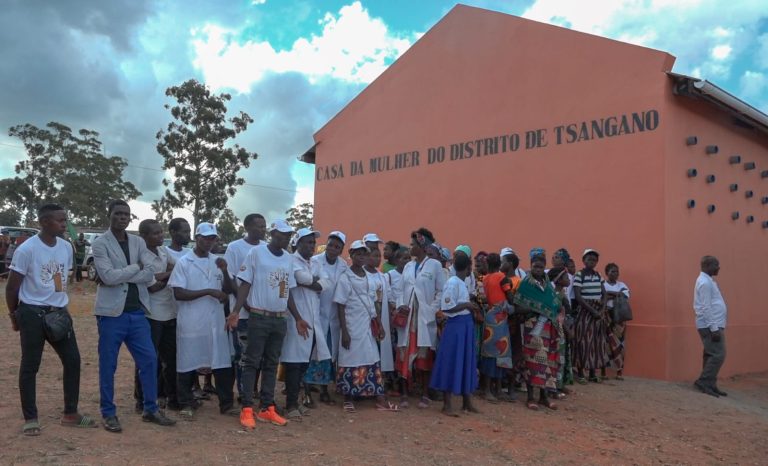
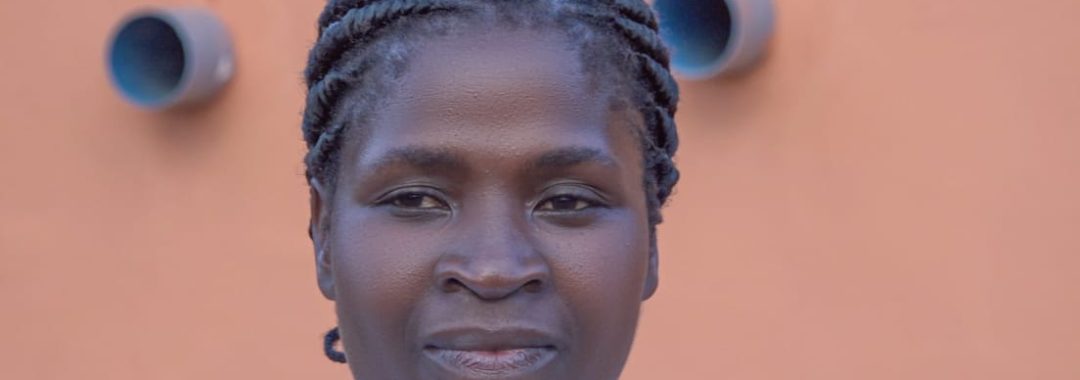
Janete Mussone’s vibrant smile spreads an energy of discovery and connection during the inauguration of the Tsangano Women’s House, the first of its kind to be delivered under the implementation of DELPAZ to a remote community in Tete Province, in central Mozambique, a region once haunted by armed conflict.
Amid dancing and applause, Janete celebrates the achievement of soon being able to sell bread made with her own hands (previously, bread was imported from Malawi) and the support she receives from 15 other women, out of the 20 members of the Women’s House that she leads, whose stories intertwine as they begin new paths and rebuild dreams, as well as reaffirm their rights.
“It is the first time we have had this house in Tsangano, which brings together many activities that will change the stories of many families in this district,” says an enthusiastic Janete Mussone, who herself has just rediscovered herself, as she explores with a determined gaze the spaces that will host the various initiatives to be developed there.
The Tsangano Women’s House is a space for shelter, listening, training, and empowerment for women and men, aimed at promoting local economic growth.
In addition to being a centre for providing support, the Tsangano Women’s House represents for each woman a place of guidance, protection, and respect. It was inaugurated on 27 March 2025, and was attended by Anne-Aël Pohu, representative of the Delegation of the European Union in Mozambique.
“Here we want to bake bread and sell it right here. We will also do some farming business activities, such as vegetable production, to be sold here. We also have a meeting room for our gatherings and for community hire, as well as a storage facility that can be rented to store agricultural products from traders,” emphasises Janete Mussone, noting how this will help address inequalities and lack of opportunity.
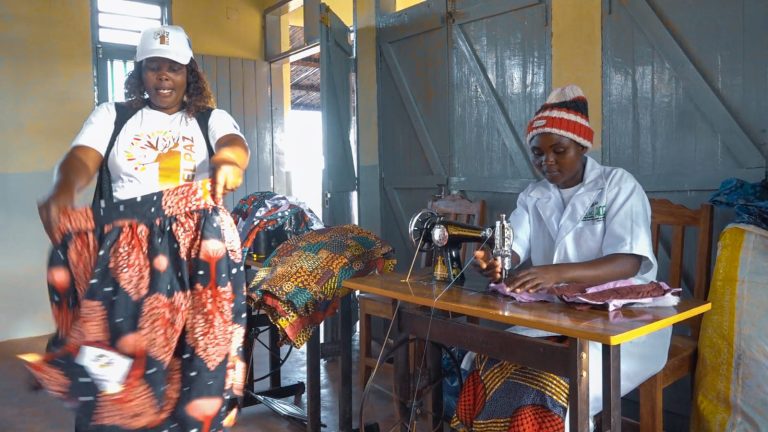
“I discovered that among us women [at the Women’s House] there were many hidden talents, whether in cooking or tailoring, because we are making incredible clothes that we sell to the community,” highlights Janete Mussone, adding that “before, it was only possible to buy these cape-based fashion garments in Tete or Maputo.”
The green incubator, demonstration farming field, and multipurpose water supply system—structures built adjacent to the Women’s House—will revolutionise agriculture, as well as ensure drinking water for the community and irrigation for the Women’s House fields.
“In this Women’s House farm, we will work ourselves, and the produce we harvest will be sold, and the money will be invested here in the house’s restaurant, but also to meet other needs we may have,” she notes, while listing the range of activities.
For her, the Women’s House is more than a physical space; it is a symbol of welcome, empowerment, and transformation, where women are heard, valued, and strengthened to become protagonists of their own stories.
The Women’s House is part of the DELPAZ initiative, a programme that has played a crucial role in transforming the lives of communities covered in Tete Province, specifically in the districts of Moatize, Tsangano and Dôa.
The programme brings together efforts to promote economic and social development, with visible impact on the most vulnerable communities.
DELPAZ is a programme of the Mozambican Government, funded by the European Union, implemented by the Italian Agency for Development Cooperation (AICS) in the provinces of Manica and Tete, and by the Austrian Development Agency in Sofala Province, with the secretariat managed by the United Nations Capital Development Fund.