Reflections and aspirations: the voices of DELPAZ beneficiaries in the provinces of Tete, Sofala and Manica

While the political scene in Maputo is fervently discussing the possibility of a National Reintegration Plan, stimulating an in-depth dialogue between the authorities and civil society, a path towards tangible change is already being taken in the provinces of Manica, Tete and Sofala. These steps, taken with determination, have already produced results that deserve to be supported and can constitute a solid starting point. However, the solution lies not only in policies and action plans, but above all in the direct experience and authentic voices of the protagonists of this transformation.

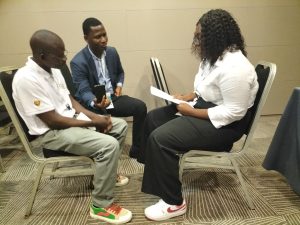
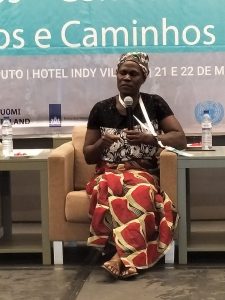
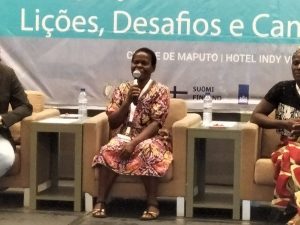
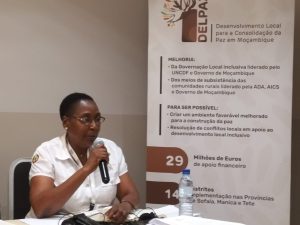
On 21 and 22 March, the International Conference on Post-Conflict Reintegration was held in Maputo, promoted by the Institute for Multiparty Democracy (IMD), under the high patronage of the Ministry of Justice, the Ministry of Combatants and the Secretariat for Peace (PPS). Among the participants, from the provinces of Tete, Sofala and Manica, the vibrant voices of Florinda, Rita, Mário, Graça, Anita, Isabel, Carménia and Carlota stood out.

For many of them, it was their first time in Maputo and they brought with them a message full of hope and urgency: “We want peace,” they declared emphatically. “We want to work the land, we are peasants. We want to grow our own food, send our children to school. We want to live in peace and for that we need your help.” Their words resonate with a palpable urgency, as they reflect essential needs: access to water, infrastructure, roads, markets, hospitals and schools.

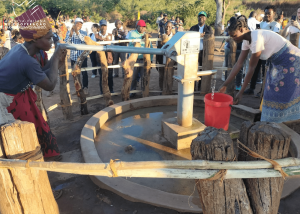
The experiences recounted during the conference were moving and enlightening. Anita, her eyes still incredulous, commented on the sight of the abundance of water in Maputo’s hotels, contrasting it with the reality of her community, where water is a precious commodity that can only be reached after long journeys. Mário, impressed by the grandeur and vibrancy of the capital, thanked DELPAZ for bringing the borehole to his community and new agricultural practices, along with seeds and tools, expressing the importance of extending this type of project to all communities in need.

Florinda shared a feeling of gratitude and recognition: “We were nothing, but now we’re here talking and you’re listening to us. DELPAZ has made us visible.” These testimonies are a tangible reflection of the work done by DELPAZ, also evidenced by the distribution of the Declaration of Inhanzónia, a symbol of solidarity and inclusion promoted through the organisation of the solidarity camp in November last year in the Báruè district.

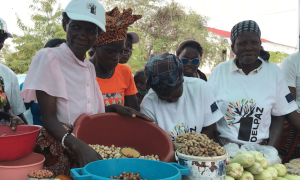
The role of women as local actors and leaders was particularly emphasised, with Carlota Inhamussua, an active DELPAZ Programme collaborator in Sofala Province, sharing significant experiences such as the savings project and the dream box. These activities aim not only to make tangible resources available, but also to stimulate the dreams and objectives of the communities involved, strengthening trust and people’s sense of belonging to their communities.

The road to peace and prosperity requires a collective and sustained commitment. When these communities begin to take the first steps towards change, it is crucial that they are not left on their own. They need time, support and resources to grow and continue to cultivate peace in their territories. Only through a shared commitment and lasting solidarity can a future of hope and prosperity be guaranteed for all Mozambican communities.

All of them demanded loudly not to be left alone, now that they are starting to ‘crawl’ and need more time and support so that they can ‘grow up’ and continue to cultivate peace in their communities.

DELPAZ, in partnership with the IMD, implemented by the AICS in Manica and Tete, and by the ADA in Sofala, with the support of the UNCFD, also contributes to this. In addition to water, infrastructure, access roads, seeds and new agricultural practices, it has stimulated the dreams of the communities most affected by armed violence, where DDR beneficiaries have returned to live together with their families.

As repeatedly expressed by the EU Ambassador to Mozambique, Antonino Maggiore, “As Mozambique’s partners, we are fully aware of the challenges we face in terms of reintegration and reconciliation; […] Peace and reconciliation can only be achieved through a thriving democracy and prosperity for the benefit of all Mozambican citizens.”

Provincial coordination committee wants extension of DELPAZ to ensure sustainability of projects in Manica

The DELPAZ provincial coordination committee in Manica has recommended extending the programme by one year, until 2025, to ensure that all the investments already made, in personnel and social infrastructure, become sustainable and continue to benefit the communities at the end of their implementation.

The coordinating body, which met in hybrid (face-to-face and remote) at the 5th Manica provincial committee on 29 May in the district headquarters of Macossa, whose debate was dominated by the extension of the programme, applauded the gains and social impact achieved so far with the implementation of DELPAZ in the five districts and suggested speeding up the implementation of the plans to catch up.

The committee members argue that the communities need more time to take ownership of the ongoing investments, which are improving their incomes and living conditions through livelihoods, as well as having a direct impact on agricultural activities and public infrastructure, such as water sources, markets, warehouses and others.

‘Everything is happening at the end, and in order to have all the gains we wanted with DELPAZ it was important to re-plan,’ to ensure that there is an exit strategy and sustainability, and that it must be integrated into the plans of the districts, emphasised Adelaide Charles, Permanent Secretary of the host district.

“We’re halfway there. Now things are looking up because they’re being done, and we need to guarantee sustainability, because our experience is that many projects have discontinued with their exit, and that won’t do any good if we want to contribute to consolidating peace,” emphasised Ernesto Lopes, Manica’s provincial director of Agriculture and Fisheries.

The Italian Agency for Development Cooperation (AICS), which implements DELPAZ in Manica and Tete, in partnership with a consortium of civil society organisations led by the Italian NGO Helpcode, noted that the extension of the programme is on the table and remains open, having already been discussed at the National Committee meeting on 24 May in Maputo.

In all five districts of Manica province, DELPAZ is implementing projects in the areas of agriculture, infrastructure and entrepreneurship to ensure the economic and social reintegration of all ex-combatants, their families and rural communities affected by the conflict in order to achieve lasting peace in Mozambique.

Meanwhile, the Manica provincial coordinating committee gave a positive assessment of the progress of DELPAZ’s activities between November 2023 and April 2024, highlighting the construction, rehabilitation, extension and equipping of public infrastructure, as well as the training of 64 public service technicians and 77 community members to improve local governance and community livelihoods.

Access to water

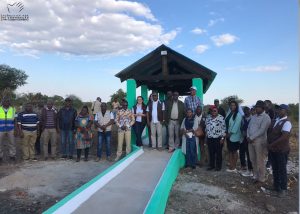
In the period in question, AICS notes that six hydraulic infrastructures were built, eight hydraulic infrastructures were rehabilitated and a manual pumping system was converted to solar, benefiting more than 19,000 people, including former guerrillas under the DDR. Of all the beneficiaries, 60 per cent are women.

In the Barué district, two water supplies were built, directly affecting more than 3,800 people in two communities, where 12 former guerrillas under the DDR also live.

In Gondola, two water supplies were built, benefiting more than 1,200 people from two communities, where a former guerrilla is based.

In Macossa, eight water supply sources were rehabilitated, which has a direct impact on the lives of more than 11,600 people, including eight demobilised soldiers, while in Guro, a water supply source was built, benefiting more than 600 people in the community.

In the district of Tambara, a water supply source was built and a manual pumping system was converted to photovoltaic pumping, benefiting 2,700 members of two communities and five members of the DDR.

Furthermore, out of a total of 13 communities in the five districts that should benefit from solar-powered multi-purpose boreholes, geophysical surveys have been carried out in Macossa, while two boreholes have already been successfully drilled in two communities in Gondola, one positive and one negative borehole in Barué, two boreholes in Guro, and drilling has been completed in the three communities in Tambara.

Agriculture

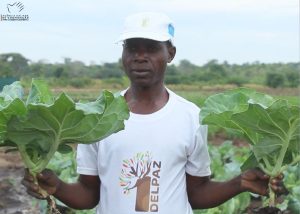
In agriculture, AICS continued, there was an increase in the adoption of intelligent agricultural technologies and practices to increase production and productivity, with the assistance of local institutions to be ‘green incubators’, with 51 agricultural associations benefiting.

In addition, 47 demonstration fields were set up for maize, mapira, beans, nhemba and peanuts, and certified seeds were delivered. Certified vegetable and common bean seeds were also delivered, along with the distribution of production materials. In addition, 18 multiplication plants were installed.

Five green points were also set up, one in each district, where in addition to irrigation infrastructure and incubators (shade trees), regular technical assistance is provided for production and marketing.

Also in the agricultural sector, animal treatment corridors were built, a carracicide tank was rehabilitated in Guro and Macossa, and a market and district warehouse in Macossa were rehabilitated to make agricultural production viable.

An irrigation system was set up in Guro, and a drip irrigation system and a gravity irrigation system were installed in Tambara.

Training

Training was given in associations and leadership. As part of improving service provision for public, private and civil society actors, 64 public service technicians from the 5 districts were trained in human rights, citizenship, financial literacy, participatory governance and protection from sexual abuse.

77 people were also trained in human rights, gender equality, leadership, climate change, economic empowerment and business and savings management, as part of local capacity building.

Seven savings groups were also set up in producers’ associations to support women’s empowerment and social inclusion at district and community level.

Two cycles of training were also completed, covering 131 young small farmers from the districts of Barué and Guro (20% of whom are relatives of former guerrillas under the DDR) in the areas of agricultural and animal production techniques and the conservation of agricultural products, in partnership with the Chimoio Agrarian Institute (IAC), the oldest institution in the field in Mozambique and Africa.

Marcos Augusto: personal transformation and creating opportunities for the youth of his community

Marcos Augusto, with a trajectory like that of many young people in his village of Mudima, in the northwestern interior of Gondola, Manica province, finished 10th grade and spent many years waiting for a job opportunity in the public sector.

He only had one year left of ‘hope’ for his dream job in the state – as the age limit for admission is 35 – when, earlier this year, he applied for a carpentry training position under DELPAZ, a Mozambican government programme implemented by the Italian Agency for Development Cooperation (AICS), which pays special attention to creating opportunities for young people, women, ex-combatants and their families.

‘I applied and was selected in the two phases before the training and, together with other trainees, we were admitted to a training course that started on 15 May 2024, and I chose the area of carpentry,’ explained Marcos Augusto, who is doing a one-month internship.

He emphasised that training in carpentry was the push he needed to take the lead in his career. Since then, he has started to ‘write’ his own story,’ says Marcos Augusto, ’embracing with dedication the opportunity to train in carpentry, a trade with which he intends to create self-employment and help his remote community.

‘From where I live to the town of Gondola is 18 kilometres, and for those who need coffins for burials, or to have windows, doors and other items built, getting there is quite expensive. That is why I thought of becoming a local carpenter,’ he said.

Learning the trade, he said, was essential for him to think about building a successful career, one that will focus on helping many young people in his village get out of unemployment, taking refuge in crime and drug use.

‘There are young people who are not working, so if I bet on self-employment, with the kit they will give me in this training and some money, I will take young people and employ them in my carpentry workshop. That way, these young people won’t steal, and they won’t have dependencies. They will work in my company, which I want to grow,’ he said.

This training was quite advantageous for him. It would have taken him a lot longer to become a carpenter, a desire, however, that he had also long had to follow in the footsteps of his uncle, a carpenter.

‘I would like the project to provide me with manual and electronic equipment, because electrical equipment produces furniture faster than manual equipment, which would really help me achieve my goal of employing many young people in my area who are not working,’ he said.

Thanks to the development of skills and confidence, Marcos Augusto is grateful for the opportunity provided by DELPAZ and hopes that the programme will reach other young people in the provinces affected by the armed conflict.
A total of 100 young people have already benefited from vocational training in carpentry, blacksmithing, construction, mechanics and tailoring in the five districts where DELPAZ is implemented in Manica province.

Eneida, the young electrician who wants to transform her quiet village with smart lighting

Driven by her love of electricity, Eneida Piedade Domingos, 24, was inspired to transform her quiet village in the interior of the Guro district with smart lighting, after having benefited from the electrical installation course promoted within the DELPAZ programme.

The daughter of a former Renamo guerrilla fighter, she says that the armed conflict in her district has slowed development, but also the form of lighting, which is not in tune with the harmony of light compared to developed cities in the country and the world.

‘This was the opportunity I found to take a course,’ she says, emphasising that this gave her the knowledge she needed to realise her dream of seeing her village use technology to light its houses and streets. Eneida points out that although this technique is already applied in other parts of the world, it is still little used in her district.

‘The example of using photocells in houses makes it possible to flip the switch at a certain time and light up a room without the need for human presence,’ as well as the use of app-controlled smart bulbs to save energy consumption in homes, he explains enthusiastically.

She emphasised that ‘the course helped me to come up with ideas for changes in my district, such as the use of objects that many people already use’ in advanced cities.

Eneida finished compulsory schooling without having had the opportunity for vocational training, especially in the field of electricity, her passion since childhood, and sees this opportunity as a window of change for her social life as well.

‘I am a woman and I was able to take the electricity course; therefore, I encourage other women to take this type of training and find a job,’ to achieve economic independence and “not just wait for men to work”.

She insists that women should be able to support the family on their own and ‘not just wait for the man, wait for money from someone, so having an education is important to be able to support one’s family,’ she notes, thanking DELPAZ for its efforts in providing training opportunities for young people.

‘I am very happy that the DELPAZ programme has given us this opportunity to study, I am really grateful, because even though not all the young people in my district were able to take the course, I will reach out to other young people to teach and together transform our district,’ says Eneida Piedade Domingos.

A total of 100 young people has already benefited from vocational training in carpentry, metallurgy, construction, mechanics and tailoring in the five districts where DELPAZ is implemented in the province of Manica.

The DELPAZ programme pays special attention to creating opportunities for young people, women, ex-combatants and their families.

In all five districts of Manica Province, thousands of people have already benefited from DELPAZ, which is implementing projects in the areas of agriculture, infrastructure and entrepreneurship to ensure the economic and social reintegration of all ex-combatants, their families and rural communities affected by the conflict, in order to achieve lasting peace in Mozambique.

The Mozambican government’s programme is funded by the European Union, and together with UNCDF is implemented by the Italian Agency for Development Cooperation (AICS), which implements DELPAZ in the provinces of Manica and Tete, and by the Austrian Development Agency (ADA) in Sofala.

Evelina, Afonso Dhlakama’s former cook who used certified seeds for the first time

By family tradition, Evelina Zacarias had stored some of the maize kernels from her harvest in the barn to use them as seed for the next farming season in 2023, but climate change, which has caused drought in her village, has called this practice into question.

“We always kept the kernels that looked healthier. It’s a tradition that goes back to my grandparents, but as the rainy season waned, the seeds sprouted and withered immediately due to the sun at this stage, and so we lost most of the production, with one ear or the other surviving” in the field, which was then harvested and stored for planting, she explains.

The former guerrilla of the Mozambican National Resistance (Renamo) was reintegrated after her recent demobilisation in the village of Zivale, a locality in the interior of Muda Serração, in the district of Gondola, in the province of Manica, where, in addition to her family, she cultivates to support herself.

She joined a farmers’ association as part of the disarmament, demobilisation and social reintegration (DDR) process and received certified seed for the first time thanks to a DELPAZ support line.

“We received the certified seeds and I planted them in the field for the first time. Wary, I set aside a plot where I sowed traditional seeds, but everything that sprouted died because of the sun. All the food I have today comes from certified seed,” she explained.

“The certified seeds have greatly improved my income from field production. I had no idea that the drought was caused by climate change and that we had to react with new farming techniques and improved seeds that DELPAZ technicians are teaching us,” she remarks, as she rearranges the bundles of hay that will cover a new barn.

Evelina Zacarias, 50, reintegrated in Zivale, fought for the Mozambican National Resistance (Renamo) guerrillas for 18 years, serving as a carer for the historical leader’s children and then as Afonso Dhlakama’s cook, and has been demobilised twice, most recently in June 2020.

Evelina was recruited into guerrilla warfare at the age of seven in 1981, during the 16-year civil war, and was demobilised a first time in 1994 by the UN peacekeeping mission in Mozambique (Onumoz). After 18 years of civilian life, she rejoined the guerrillas to ‘fight for democracy’ in 2012, when Afonso Dhlakama summoned and regrouped former guerrillas in the Gorongosa mountain range in Sofala.

“I was recruited with my father in Mpunga and from there with General Ossufo (Momade) we left for Gorongosa, then for a base in Maringue and then for Massala,” a journey that took months on foot, the woman recounts, pointing out that it was in Massala that she was first demobilised.

Now the mother of eight children, all born during the intervals of the conflicts, she initially received military training for combat but was then assigned to look after the children of President Afonso Dhlakama, who later also served as cook.

“There were houses where the leader’s wives and children were and we looked after them. We washed their clothes in the rivers and cooked for them until the end of the war. President Dhlakama always came there where the wives and children were and assured us that one day the war would end, and this went on until we were demobilised for the first time in 1992,” she says with an enviable energy in her gestures.

The former guerrilla recalls that on her first demobilisation she returned to her home village of Búzi with a machete, an axe, a hoe and a bank cheque, which she never cashed because it burnt down in the hut where she lived during a fire.

She was demobilised again as part of the Demobilisation, Disarmament and Reintegration (DDR) process – which stems from the peace agreement signed in 2019 – and is now devoting her life to her family and farming.

“We are learning to overcome the drought with new production methods and this will improve our income, so we can take care of our family,” says Evelina, her usual discreet smile highlighting the dark features that cross her face.

She hopes to one day mechanise farming and abandon the hoe he uses to cultivate his two hectares of land, dedicated exclusively to growing maize and sesame.

The ex-guerrillas are among the thousands of beneficiaries of the DELPAZ Programme, which ensures the economic and social reintegration of all ex-combatants, their families and rural communities affected by the conflict, in order to achieve lasting peace in Mozambique.


DELPAZ continues to consolidate fairer, more peaceful, and more resilient communities

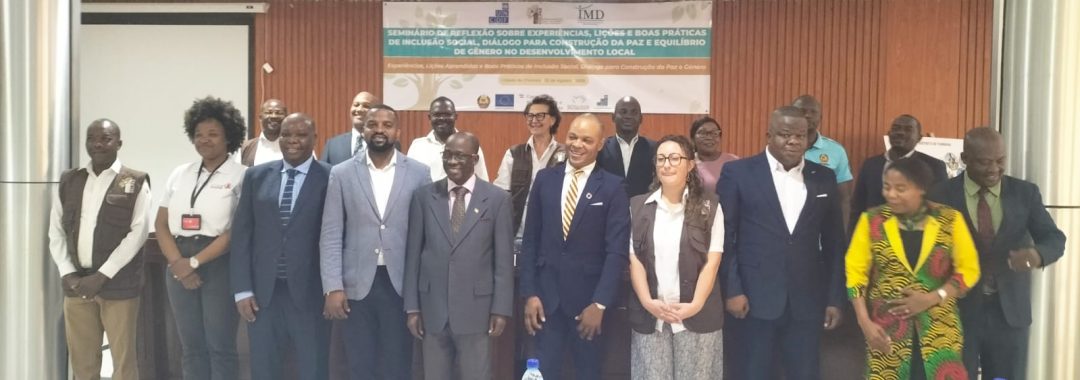
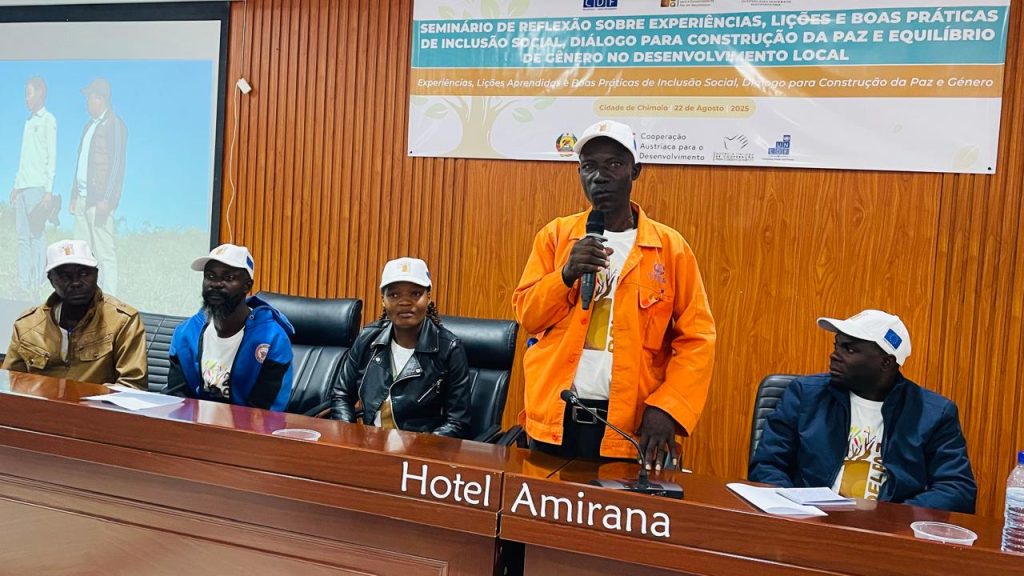
Over 100 participants from 14 districts where DELPAZ is being implemented, in the provinces of Sofala, Manica, and Tete, together with partners, gathered yesterday in Chimoio (Manica) to reflect on four years of program implementation. They agreed that DELPAZ is consolidating fairer, more peaceful, and more resilient communities.

At the reflection seminar on experiences, lessons, and good practices of social inclusion, dialogue for peacebuilding, and gender balance in local development, participants emphasized that the most relevant experiences are focused on valuing diversity and promoting dialogue.

They highlighted greater participation of women, the recognition of local voices, the strengthening of community dialogue – which acknowledges and values local languages – equity of opportunities, reintegration of historically marginalized groups such as ex-combatants and conflict victims, as essential pathways to building a fairer, more peaceful, and more resilient society.

Speaking on the occasion, Osman Cossing, Program Coordinator at the Institute for Multiparty Democracy (IMD) – which organized the event – stated that “Peace is real when it is inclusive and voices are heard and valued,” stressing that “democracy begins with dialogue.”

Tony Mossio, DELPAZ coordinator for the local governance component through the United Nations Capital Development Fund (UNCDF), noted that support was provided at all levels in an inclusive, participatory process, sensitive to cultural, gender, and ideological differences, despite initial challenges due to limited understanding of the program.

Meanwhile, Pedrito Cambrão, Dean of the Faculty of Social Sciences and Humanities at UniZambeze University, when addressing the theme “Peace, governance and inclusive local development in a post-conflict context”, underlined that without peace, everything is unstable and fragile. He insisted on the need for educational practices that heal the wounds of the past, consolidate dialogue, reconciliation, forgiveness, listening, and sharing.

“The rope that is not well tied comes undone with the first rain,” he remarked, alluding to the fact that if commitments in the Demobilization, Disarmament and Reintegration (DDR) process of Renamo ex-combatants are not treated seriously, “we risk reopening old wounds and losing the delicate thread that holds us together.”

Quoting the proverb “the river does not drink its own water”, he appealed to the executive power not to act for its own benefit and reinforced that “there is no peace that can endure without the people.”

Community Champions

The voices of community champions, who shared the transformations experienced in their lives and communities, were one of the highlights of the presentation of DELPAZ’s historical results, delivered by Giulia Zingaro of the Italian Agency for Development Cooperation (AICS). AICS implements DELPAZ in the provinces of Manica and Tete, with the support of Helpcode leading the NGO consortium in Manica and Save the Children in Tete.

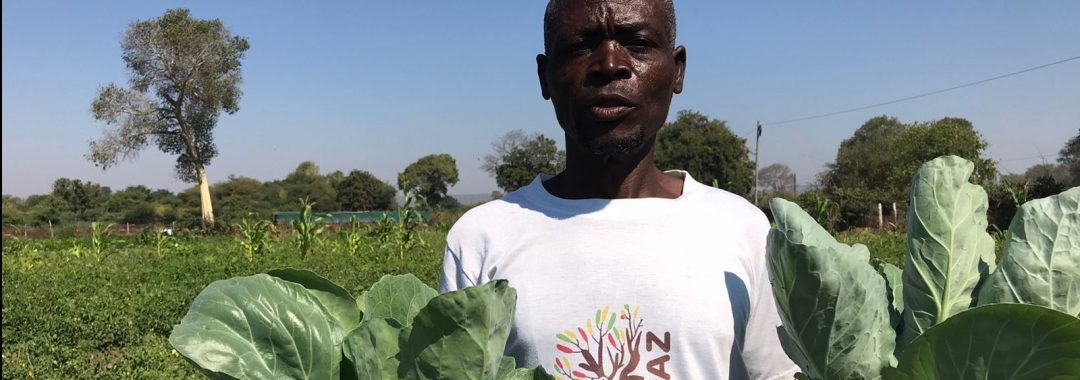
Isac Cerveja, president of Ponto Verde in Báruè, Manica district, earned strong applause when he proudly declared: “We were small farmers, and now we are small entrepreneurs,” thanks to a broadened vision that recognizes agriculture as a driver of development.

“The expansion of Ponto Verde to five hectares enabled the purchase of an irrigation motor pump with our own resources from agricultural product sales, and now DELPAZ has provided a system capable of irrigating up to 60 hectares of farmland,” he said, also highlighting new market linkages, including participation at FACIM last year and again this year, as a key element for financial sustainability.

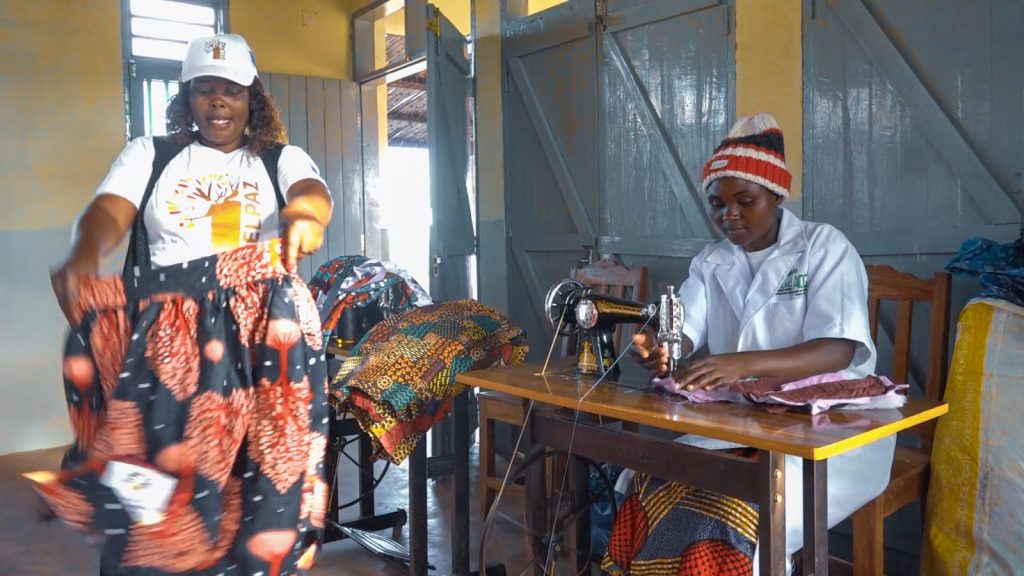
Similarly, Alcélia Aristide Saimon, another DELPAZ champion, explained that after completing a tailoring course, she now sews clothes to sell in remote communities with little access to clothing. In the poorest areas, she exchanges garments and school uniforms for maize, ensuring that children can attend school.

Armando Taunde expressed satisfaction with the inclusion of his children in vocational training across several practical fields, noted that their activities are progressing, and appealed for the program to be extended to other districts not yet covered by DELPAZ.

Independent consultants Luís Taiado and Nelson Moda presented preliminary results of a study focused on lessons and good practices of social inclusion, gender empowerment, dialogue for peacebuilding, and equitable local development. They pointed to broader and more active participation of women, including DDR beneficiaries, and emphasized that DELPAZ has successfully rooted itself in communities.

However, they cautioned that despite progress achieved, challenges remain, such as weak coordination among partners, local governments, and communities during DDR implementation, as well as perceptions of stigmatization and marginalization among some DDR members who still do not fully identify with the program.

Given the complexity of the Mozambican context, marked by periods of armed conflict and socio-political tensions, an appeal was made to strengthen dialogue, which has proven to be an indispensable tool for building sustainable peace.

The Secretary of State of Manica Province, Lourenço Lindone, who opened and closed the event, praised the engagement of cooperation partners in seeking resources to fund programs that improve the social lives of the population in the three provinces.

“The main lines of intervention of DELPAZ, [a program of the Government of Mozambique funded by the European Union] have complemented the efforts of central and local government in promoting good practices for harmonious social coexistence in communities,” stressed Lourenço Lindone.


Janete, the “warrior” who rediscovered herself at the Tsangano Women’s House

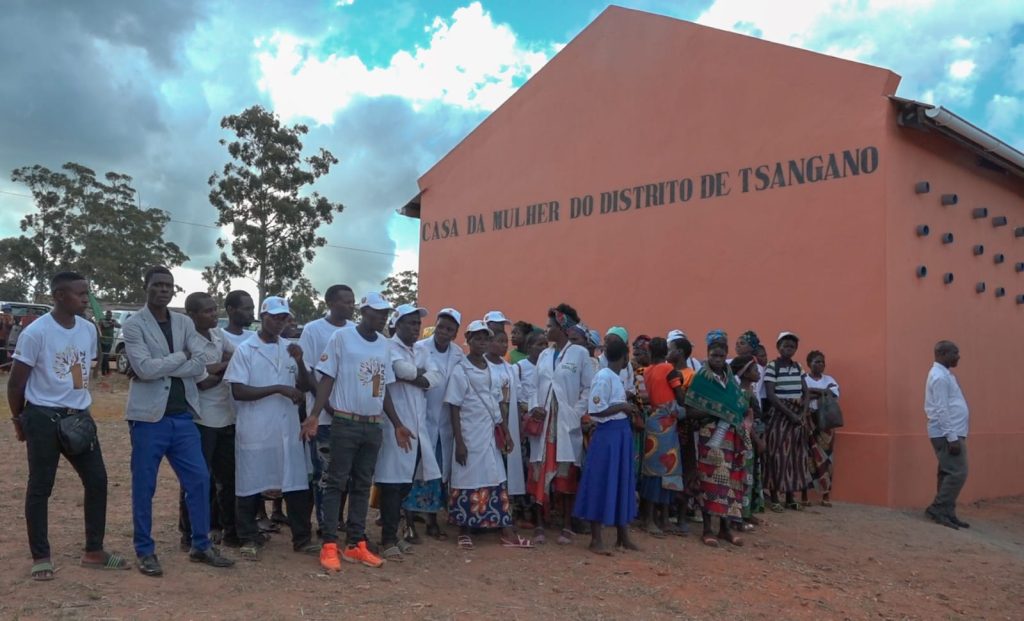
Janete Mussone’s vibrant smile spreads an energy of discovery and connection during the inauguration of the Tsangano Women’s House, the first of its kind to be delivered under the implementation of DELPAZ to a remote community in Tete Province, in central Mozambique, a region once haunted by armed conflict.

Amid dancing and applause, Janete celebrates the achievement of soon being able to sell bread made with her own hands (previously, bread was imported from Malawi) and the support she receives from 15 other women, out of the 20 members of the Women’s House that she leads, whose stories intertwine as they begin new paths and rebuild dreams, as well as reaffirm their rights.

“It is the first time we have had this house in Tsangano, which brings together many activities that will change the stories of many families in this district,” says an enthusiastic Janete Mussone, who herself has just rediscovered herself, as she explores with a determined gaze the spaces that will host the various initiatives to be developed there.

The Tsangano Women’s House is a space for shelter, listening, training, and empowerment for women and men, aimed at promoting local economic growth.

In addition to being a centre for providing support, the Tsangano Women’s House represents for each woman a place of guidance, protection, and respect. It was inaugurated on 27 March 2025, and was attended by Anne-Aël Pohu, representative of the Delegation of the European Union in Mozambique.

“Here we want to bake bread and sell it right here. We will also do some farming business activities, such as vegetable production, to be sold here. We also have a meeting room for our gatherings and for community hire, as well as a storage facility that can be rented to store agricultural products from traders,” emphasises Janete Mussone, noting how this will help address inequalities and lack of opportunity.

“I discovered that among us women [at the Women’s House] there were many hidden talents, whether in cooking or tailoring, because we are making incredible clothes that we sell to the community,” highlights Janete Mussone, adding that “before, it was only possible to buy these cape-based fashion garments in Tete or Maputo.”

The green incubator, demonstration farming field, and multipurpose water supply system—structures built adjacent to the Women’s House—will revolutionise agriculture, as well as ensure drinking water for the community and irrigation for the Women’s House fields.

“In this Women’s House farm, we will work ourselves, and the produce we harvest will be sold, and the money will be invested here in the house’s restaurant, but also to meet other needs we may have,” she notes, while listing the range of activities.

For her, the Women’s House is more than a physical space; it is a symbol of welcome, empowerment, and transformation, where women are heard, valued, and strengthened to become protagonists of their own stories.

The Women’s House is part of the DELPAZ initiative, a programme that has played a crucial role in transforming the lives of communities covered in Tete Province, specifically in the districts of Moatize, Tsangano and Dôa.

The programme brings together efforts to promote economic and social development, with visible impact on the most vulnerable communities.

DELPAZ is a programme of the Mozambican Government, funded by the European Union, implemented by the Italian Agency for Development Cooperation (AICS) in the provinces of Manica and Tete, and by the Austrian Development Agency in Sofala Province, with the secretariat managed by the United Nations Capital Development Fund.

Bartolomeu, the former guerrilla fighter who lives from farming in the “desert”

Bartolomeu Tenesse, 58, fought for 13 years in the guerrilla forces of the Mozambican National Resistance (Renamo), in a front whose mission was to sustain the civil war, using weapons that were meant to be seized in military barracks raids. He was demobilised twice, most recently in June 2021, and is now, for the second time, living what is referred to as civilian life.

The former guerrilla is now struggling to support his community through agriculture, which he practises in the village of Casado, in Tambara, a district with a dry steppe climate, a dry winter and low annual rainfall.

The district of Tambara, in Manica province in central Mozambique, is currently being hit by severe hunger caused by a drought induced by the El Niño phenomenon, which has devastated harvests. Across the Zambezi River, Tambara borders the district of Mzimba in Malawi, which has been declared a disaster zone due to the same phenomenon.

“Food insecurity this year is alarming. There are families surviving on maize bran, wild fruits and tubers. Others go days without eating. So if I intensify farming, with good water availability, I can withstand any kind of hunger,” says Bartolomeu Tenesse, his hand on his chin and his arm resting on the handle of a hoe.

Bartolomeu was recruited into the guerrilla movement at the age of 15, in 1985, in Angónia (Tete), when he was travelling to Blantyre in search of work in Malawi, during the 16-year civil war.

“Our vehicle was intercepted; the young people were separated and taken to a place where we spent the night. At dawn, we were surprised to see that we were being guarded by armed men. They told us we had to carry out the mission of bringing democracy to the country,” he recalls, referring to his transfer for military training at the Chiriza base in Angónia.

He remained at that base until 1987, carrying out operations in Tete province, when he was called to the central base of Merece-Chamboco in the Gorongosa mountains, where he met and spoke with the historical leader Afonso Dhlakama.

“We greeted President (Afonso) Dhlakama as soldiers from Tete. From there we were divided into small groups, and I was sent to Inhaminga in Sofala. Later we operated in Dondo, Nhamatanda, Shemba, until we returned to one of the bases in Tete province.”

He added: “Our task was to fight and collect military equipment for our bases. On one of those weapon-delivery missions, I was taken again to the place where President Afonso Dhlakama was.” He was later recognised for those missions and, a few years afterwards, the General Peace Agreement (GPA) was reached in Rome in 1992.

Even “in peace, we continued to suffer, without freedom or democracy”, which led him to return to the bush in 2017 from the Nhandete base (Tambara), from where they mourned the “painful” death of Afonso Dhlakama in May 2018, until he was demobilised for the second time in June 2021 in Báruè, under the Disarmament, Demobilisation and Reintegration (DDR) process stemming from the Maputo Peace Agreement signed in 2019.

Like most former Renamo fighters, Bartolomeu was first demobilised in 1994 by the United Nations peacekeeping mission in Mozambique (ONUMOZ).

He recalls that during his second demobilisation, he returned to his resettlement village in Tambara with a machete, a hoe, an axe, a variety of agricultural seeds, and a promise of development projects and a subsistence pension.

“They said projects would come, and we received the DELPAZ programme. In fact, it installed a gravity-fed irrigation system that we have been using since last year. We also benefited from seeds and support from extension workers from the programme, which is helping to significantly increase production in a place that is difficult to farm because it is a dry area,” explains Bartolomeu Tenesse.

The former guerrilla is a member of one of ten farmers’ associations supported by the DELPAZ programme, which places particular emphasis on creating opportunities for young people, women, as well as former combatants and their families.

Bartolomeu and part of his family work at the Tambara Green Point, a technology transfer field that provides agricultural technologies and smart farming practices aimed at increasing production and productivity for the ten farming associations and the wider population of Tambara.


The Macossa Green Point can now rely on a tractor

In Macossa, the Green Point has come back to life. Members of the Association express satisfaction and praise the progress made towards the district’s economic development, through the DELPAZ programme, in partnership with the local government and the Chimoio Agricultural Institute (IAC).

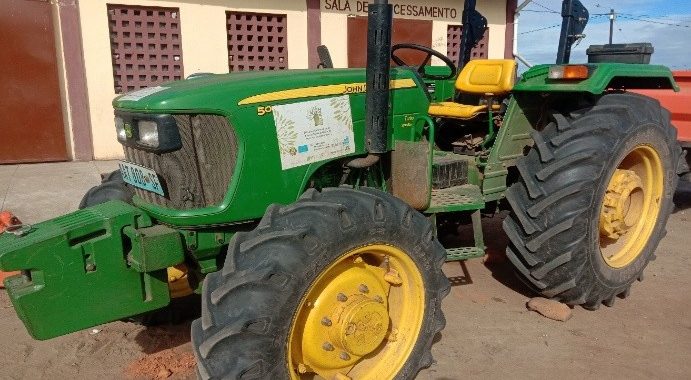
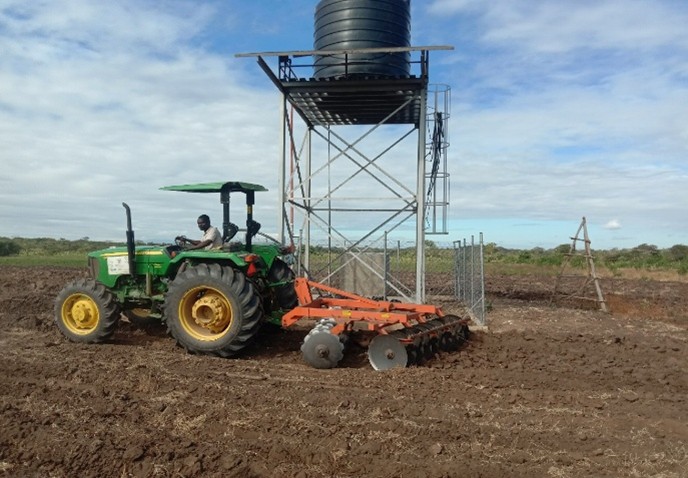
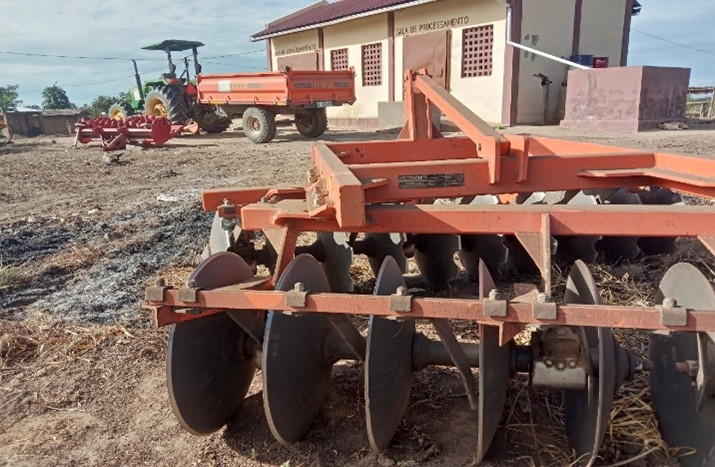
Recently, thanks to the partnership between the DELPAZ Programme and the IAC, the Macossa Green Point, which has shown consistent commitment to boosting productive activity in the district, has received a tractor equipped with a plough, harrow, seed drill, ridger, scarifier, among other agricultural implements. The initiative has accelerated field work: tasks that once took weeks using hand hoes can now be completed in just a few hours. “DELPAZ has not only given us a machine, it has given us more time to produce and to dream bigger,” the farmers say.

The association’s chairperson, Quentino Suíte Tomo, explained that before DELPAZ support they faced difficult conditions due to a lack of resources and machinery. With the means now available, including the tractor, they plan to prepare and expand the cultivated area from five hectares to more than 30 hectares, intended for the production of various crops.

The handover was attended by the DELPAZ focal point, Ergínio Alberto Romão, technicians from the District Service for Economic Activities (SDAE), and other representatives of the local government. The equipment is already fully operational and benefits more than 30 members of the association, most of whom are women and young farmers.

More land, less effort

Before mechanisation, each household cultivated an average of half a hectare per farming season. With the tractor, this area is expected to triple. The time required for land preparation could be reduced from around 15 days to less than two days. This will allow better use of the rainy season and reduce losses. Even during periods of low rainfall, the Green Point has a solar-powered irrigation system, which pumps water from low-lying areas to irrigate crops.

“We used to work from sunrise to sunset and the soil remained hard. Now the tractor will make work easier and we can focus on planting and harvesting,” said Quentino Suíte Tomo. For him, the equipment represents less physical effort and higher productivity.

A partnership delivering results

This step forms part of the development agenda of Macossa District, which recognises agricultural mechanisation in support of small-scale producers as an important contribution to the rural economy and food security.

In addition to providing equipment, the DELPAZ programme also promotes preventive maintenance of machinery, ensuring proper management and longer durability.

The district administrator, Albano Daniel Muiambo, highlighted the importance of cooperation for development and peace: “When the private sector and government work together, the impact is felt directly in the fields. This tractor shows that investing in agriculture means investing in the future of the district.”

For his part, the DELPAZ focal point emphasised that the goal goes beyond mechanisation: the aim is to increase production, generate surpluses, and improve marketing. The district already has infrastructure such as warehouses and a market to support this growth, thanks to DELPAZ. The next step will be to strengthen sales organisation and establish fair pricing for local products.

Community impact

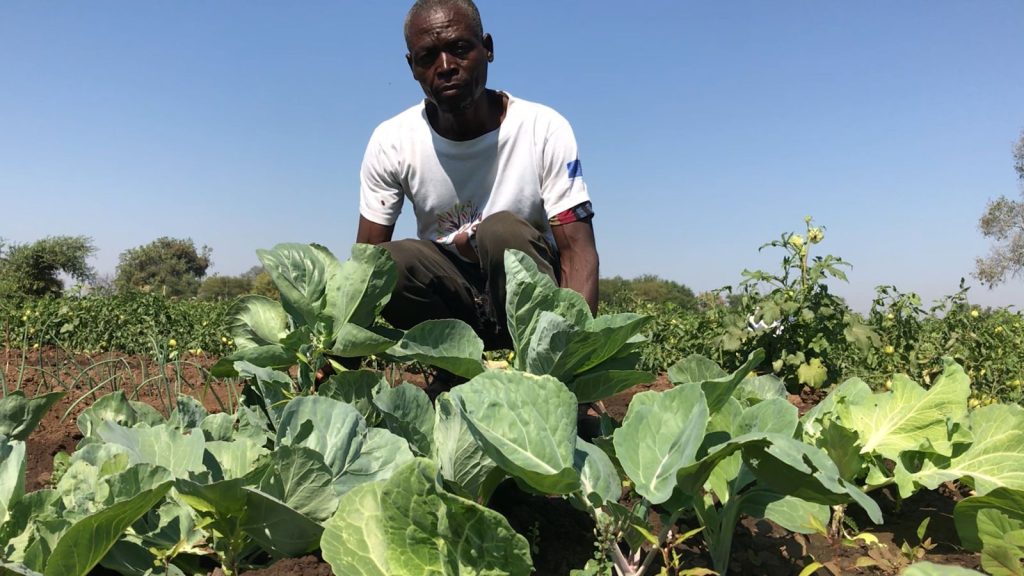
With more land prepared, the association expects to increase production by around 80% of crops such as maize, sorghum, onions, okra, cabbage, lettuce, peppers, chilli, cucumber, carrots, and beans. The surplus will be sold locally, contributing to household incomes and food security in the region.

Despite the progress, recent months have seen ongoing challenges, such as fuel shortages that have also affected Mozambique. To overcome this difficulty, members have agreed to create a community fund dedicated to maintaining and fuelling the tractor, ensuring continuity of activities after the initial DELPAZ support period.


Between wires and challenges: Eneida continues to dream

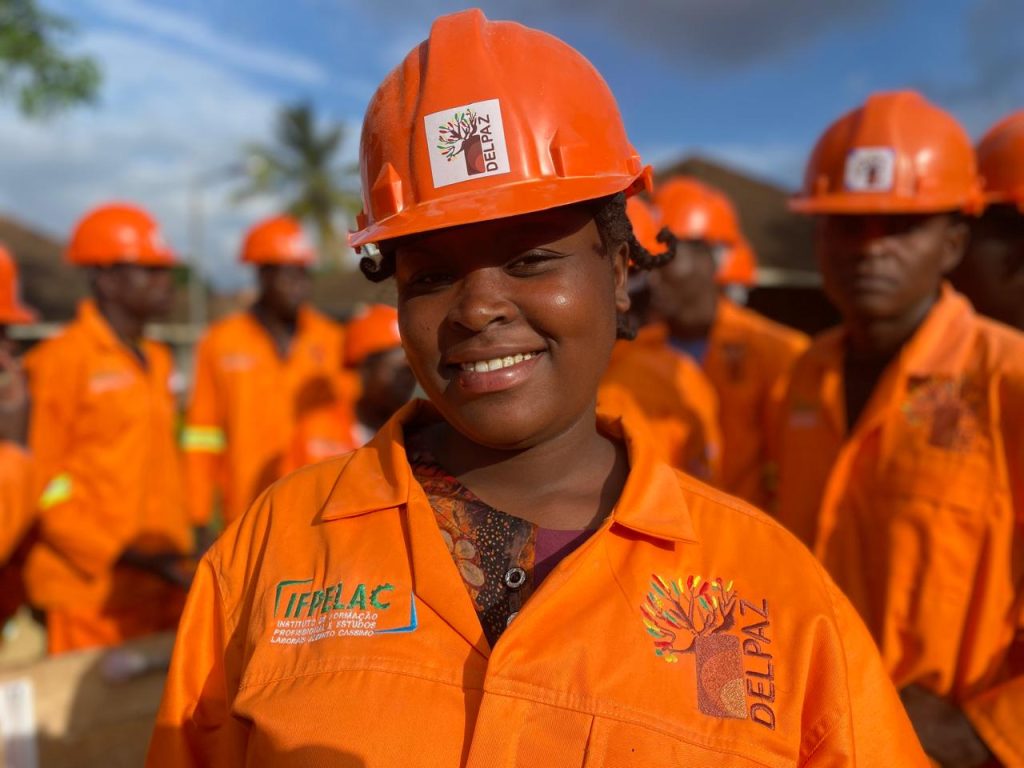
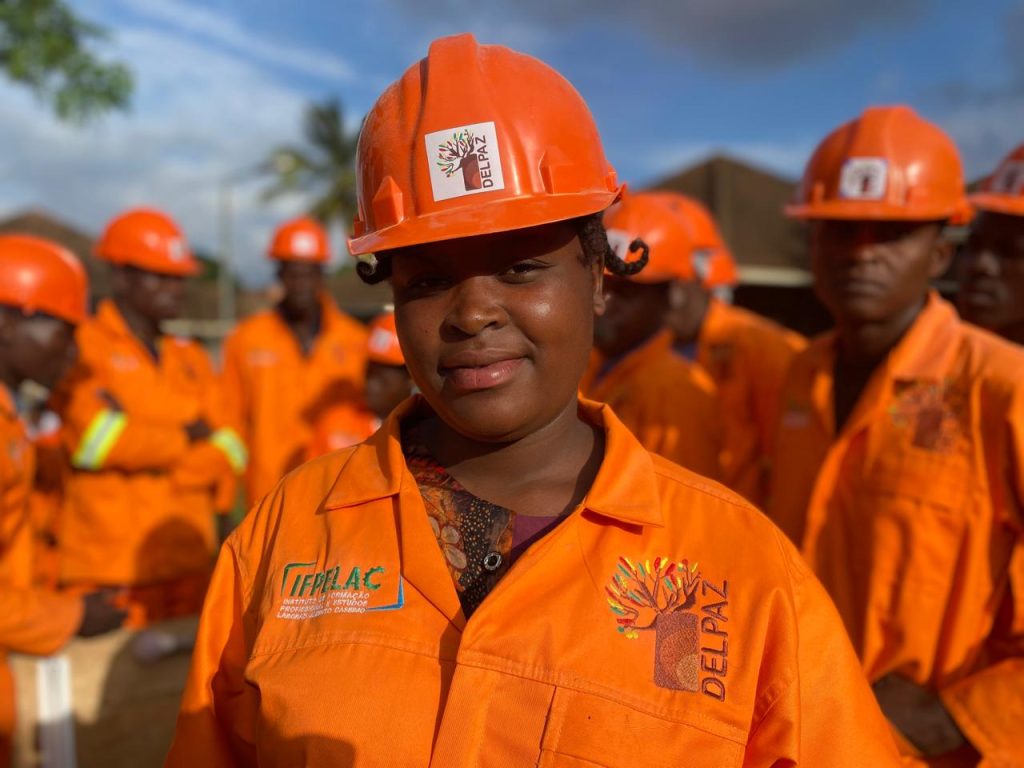
Eneida Domingos, 21, has always believed that her future could be different. Determined, curious and hardworking, she was selected to attend the Electrical Installation course at IFPELAC, as part of training promoted by DELPAZ, in coordination with local district authorities responsible for mobilising and selecting participants — a choice that would go on to transform her life.

Daughter of a former Renamo guerrilla fighter, Eneida grew up in a context marked by the impact of armed conflict in her district, which delayed not only local development but also access to modern technologies, including more efficient and harmonious lighting systems, such as those seen in more developed cities in Mozambique and around the world.

From the very beginning of her training, she stood out for her dedication. While many classmates used the breaks to rest, Eneida would remain in the classroom, focused on wires, circuits and connections that fascinated her so much. “I really liked it,” she recalls. “Electricity fascinated me and I felt it could be a great opportunity for me.”

In a previous interview while she was still attending the course, she had said that this was the opportunity she had found to train, allowing her to gain knowledge to achieve her dream: to see her village using modern technologies for lighting homes and streets, with solutions such as photocells — which automatically switch lighting on — or smart lamps controlled by applications, still little used in her region, although already common elsewhere.

“The training helped me to come up with ideas to bring changes to my district, introducing solutions that many people already use in more developed cities,” she said enthusiastically.

After completing the course, she returned to Guro carrying not only technical knowledge but also a sense of purpose. Shortly afterwards, she secured a 45-day internship at Electricidade de Moçambique (EDM), where she further developed her skills. “I learned much more than just electrical installations. It was a huge opportunity for growth, but unfortunately EDM is not hiring new staff.”

However, returning to reality brought challenges. In a context still marked by prejudice, Eneida faced skeptical looks and doubts about a woman’s ability in a profession traditionally dominated by men. “A female electrician is still seen in a negative light,” she says. “But it is not true that we cannot do the work. We are just as capable as men.”

In a world where sexism still limits opportunities, pursuing a dream requires more than talent — it requires courage. And Eneida demonstrates this every day.

Gradually, opportunities began to emerge. “I have already done some installations in homes,” she explains. “They are still few, and I cannot yet support myself.” For each simple electric installation earns around 600 meticais, an amount still insufficient to achieve financial stability, especially in a context of strong competition in the village.

Even so, Eneida does not give up. She continues to believe that dreams are possible, even when the path is more difficult for a woman. “I would like to open a women’s electrical installation company. That is still my dream.”

Over the past year, she has completed more than ten installations and is slowly beginning to gain recognition. Looking to the future, she is considering moving to Mungari, where there is less competition and greater demand for electrical services. “I am still thinking about it. There is already electricity in Mungari but no electricians. I need to save some money to support myself in the first few months. I have some friends there who can help me, at least at the beginning.”

Eneida’s story is an example of perseverance in a world that does not always make the path easy for women. It is proof that, despite obstacles, dreams remain alive — and that with courage and determination, it is possible to light the future, step by step, wire by wire.