
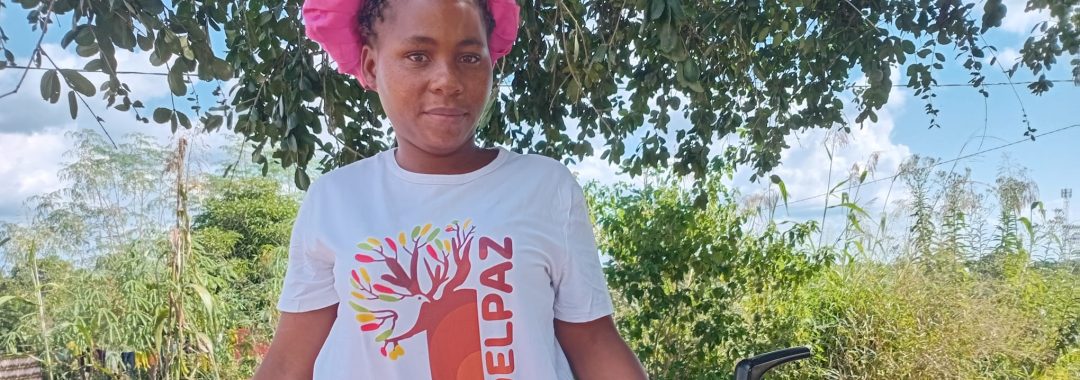
In the village of Muda Serração, where the sound of machinery has not echoed for many years and time seems to move at the pace of the land, lives Adinha Pita, a 26-year-old woman with a smile that insists on shining, even when life feels heavy.
Muda Serração takes its name from an old sawmill, the oldest in Manica Province, now silent. Here, women work the land, take care of the children and the home, while the men, for the most part, leave for the mines of South Africa. 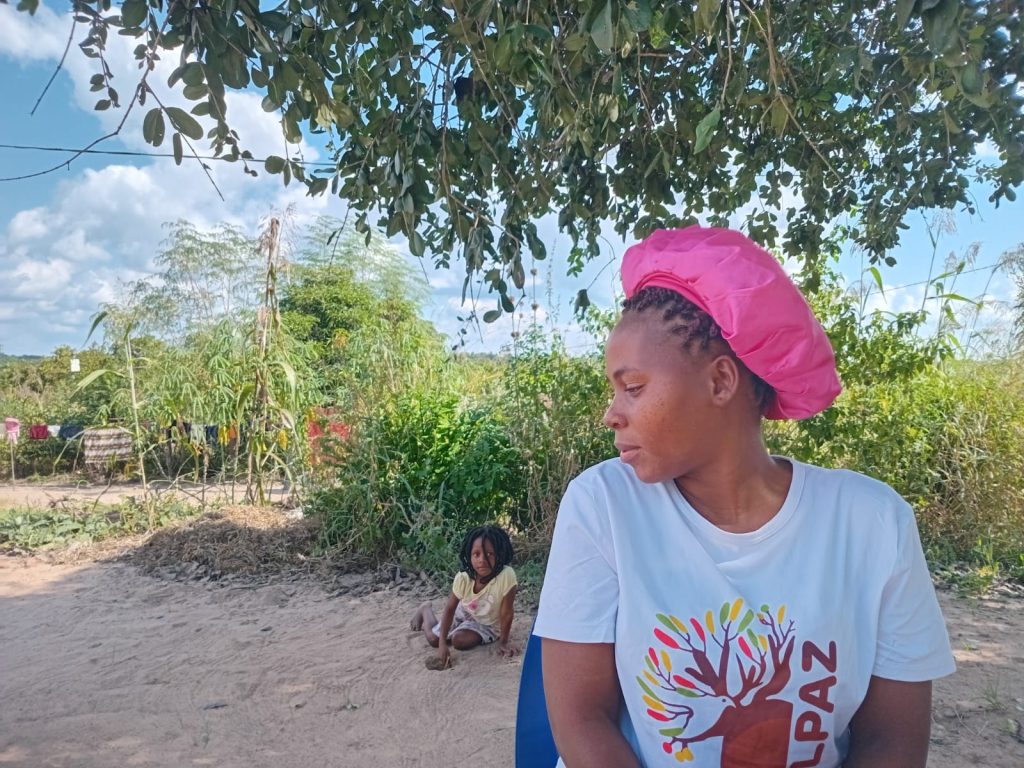
Adinha once had her dreams built for two as well. But life sometimes chooses difficult paths. Serious problems in her marriage forced her to return to her parents’ home, bringing with her what matters most: her daughter Betty, aged 6, and little António, just 4 months old.
The children’s father remained behind — and with him, responsibility that never came in the form of support. But Adinha does not speak of this with bitterness. She speaks of the future.
While António smiles in the capulana that wraps him on his mother’s back, she imagines the day when she will be able to start again. She is simply waiting for the baby to grow a little more, to reach six months, so she can go in search of work — or, even better, create her own path.
Adinha took a decisive step when she attended a cookery course at IFPELAC in Chimoio, promoted under the DELPAZ programme, in cooperation with district authorities, within the framework of local economic development. She was selected from among other candidates and, from the outset, stood out for her dedication and willingness to learn. Throughout the training, she refined her skills, gained confidence, and began to imagine new possibilities for her future. 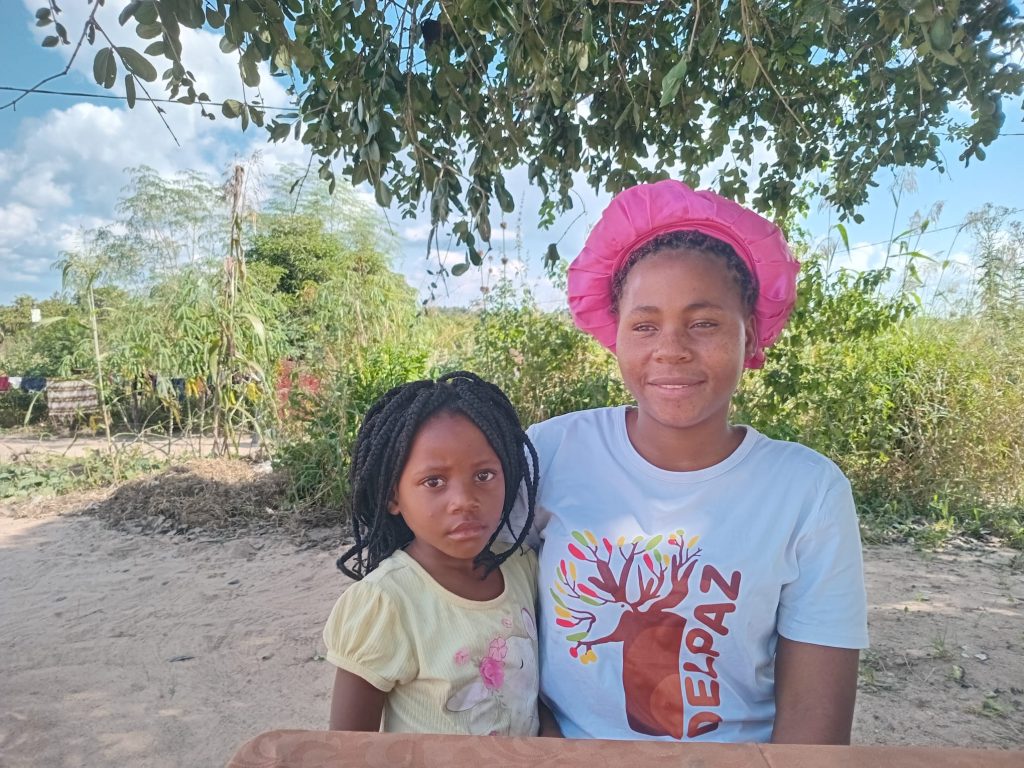
In the end, she received more than a certificate: she received tools to dream with. An electric kettle, a mixer, a table, a chair and an electric cake oven — small items that, in the right hands, become tangible bridges towards a different future.
“Here it is not easy to sell cakes,” she says. “People are not very used to celebrations. This is a rural area.”
Cake prices range from 650 to 1000 meticais depending on size.
Even so, there are special days. 1 June, for example, when Children’s Day is celebrated. In such moments, someone remembers Adinha. And she responds with dedication, turning flour, eggs and sugar into decorated cakes that bring joy to the celebration.
And Adinha dreams beyond cakes.
She imagines a small roadside stall — Muda Serração lies between Muxúnguè and Inchope — a place where travellers can stop and find hot food: rice, curry, samosas. A small stand where she could sell ready-made meals and earn enough for herself and her children.
“There are no stalls like that here,” she says. “It would be a good opportunity.” 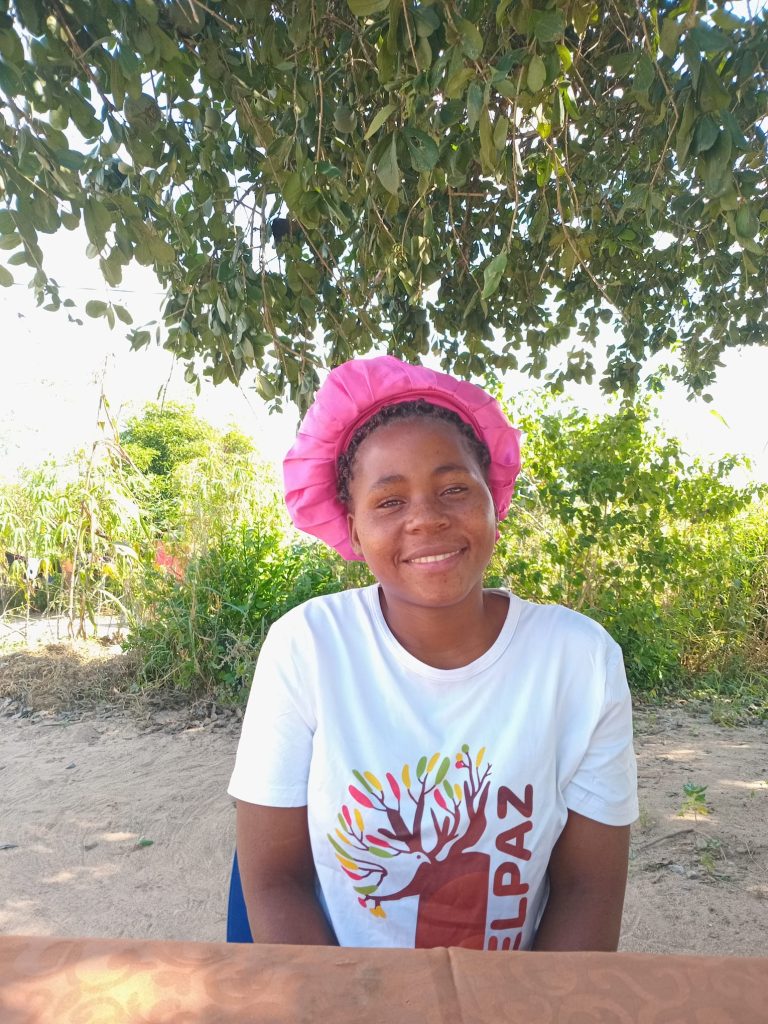
And she believes. She believes with a calm certainty, the kind that makes no noise but endures.
She is not alone. Mr André Bartolomeu, focal point for DELPAZ in Gondola District, follows her journey closely.
“She is a good girl,” he says. “She showed that during the course. And she has worked very hard.”
He believes Adinha will find her place. And she believes it too.
For now, Adinha finds strength in small things: in Betty’s laughter, in António’s quiet breathing, and in messages exchanged with her course colleagues in a WhatsApp group where they share ideas, challenges and courage.
Because, deep down, Adinha knows: her story is not made only of hardship.
And while the world around her seems still, like the old sawmill that gave the village its name, inside her everything continues to move. The future has not yet arrived — but it has already begun.