
In Sanga, once a lively neighbourhood in the Guro district, there are now only a few houses. Over the years, most of its inhabitants have moved closer to the village in search of better living conditions — electricity, water, and other amenities. This new area has been officially named Sanga 2, although locals call it Medzachumbo. But not everyone left. 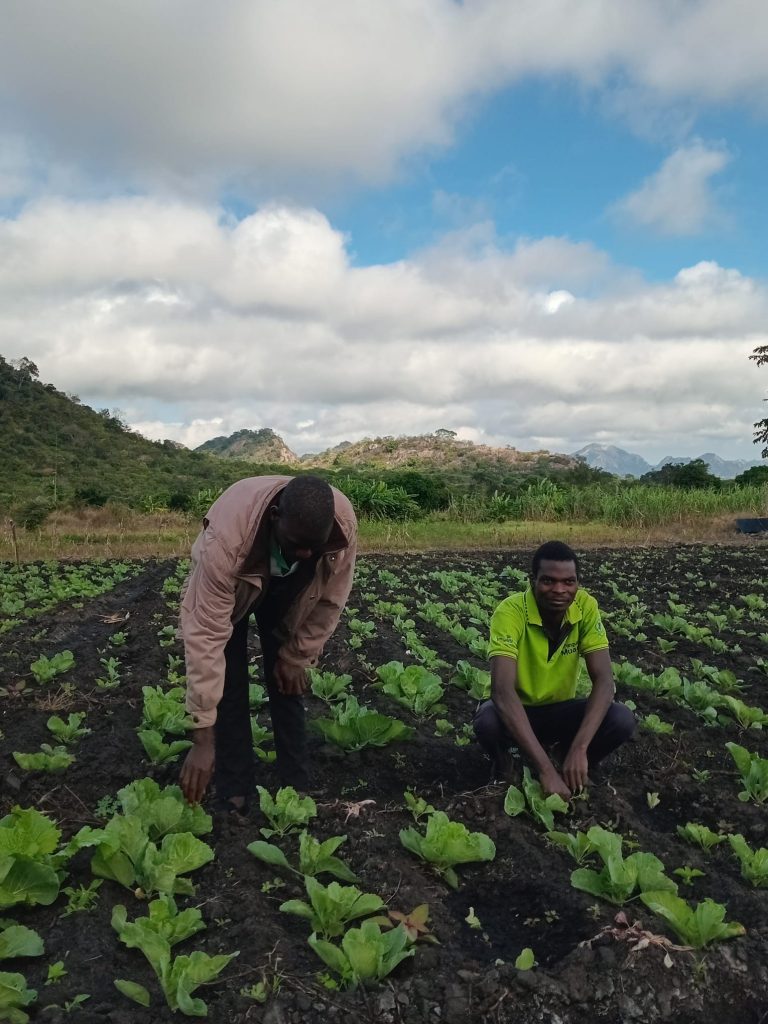
Among those who remained is Mr Feniasse Pita, chairman of the Sinembo Association — “Not me” — an organisation dedicated to supporting orphans and the elderly. Together with his family, he has continued to cultivate the land that has long sustained generations. His machamba (farm), vast and fertile, is a true mosaic of life: fresh vegetables, maize, and fruit trees bearing guavas, lemons, oranges and tangerines. In the bushland at the foot of the mountain, he also keeps improved beehives that produce high-quality honey.
It is in this environment that Tendai Pita, his son, now 31, grew up. From an early age, he learned the basics of farming by observing his father and working the land. However, Tendai aspired to go further. He attended the Manica Polytechnic Higher Institute and, in 2024, was selected for a training course at the Chimoio Agricultural Institute (IAC), promoted under the DELPAZ programme, in coordination with local authorities and institutions, as part of support for training and strengthening of initiatives such as the Sinembo association.
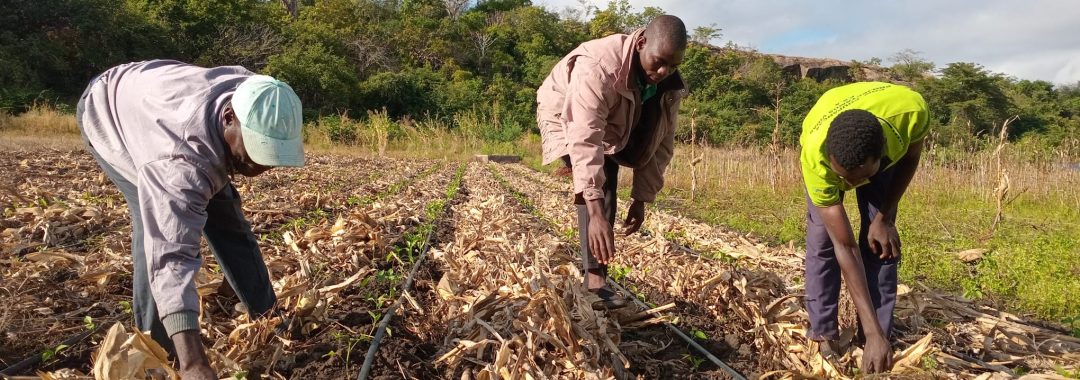
For Tendai, the training was more than a refresher — it was a revelation. “I already knew much of what the instructors explained, but I still learned many new things,” he says with conviction. Alongside his colleague Edson Lenate, 28, and five other young people, he began applying this knowledge on a machamba of nearly half a hectare, provided by his father.
The field is covered with lettuce and other vegetables. Using seeds received in the DELPAZ kit, they planted their first crop, sold it, and reinvested the proceeds. “This will be our second harvest, and we hope to earn enough to start making some profit,” Tendai says, hope in his eyes.
Among the techniques that most impressed them is the production of biopesticides. Using simple ingredients such as chilli, soap, and castor leaves, they learned to protect crops from pests in a more sustainable way. “The soap helps the mixture stick and traps the pests,” they explain. However, when infestations are severe, they still resort to insecticides — but with caution and daily monitoring.
Another innovation was the use of mulching, a technique that helps retain soil moisture — something they had never tried before. 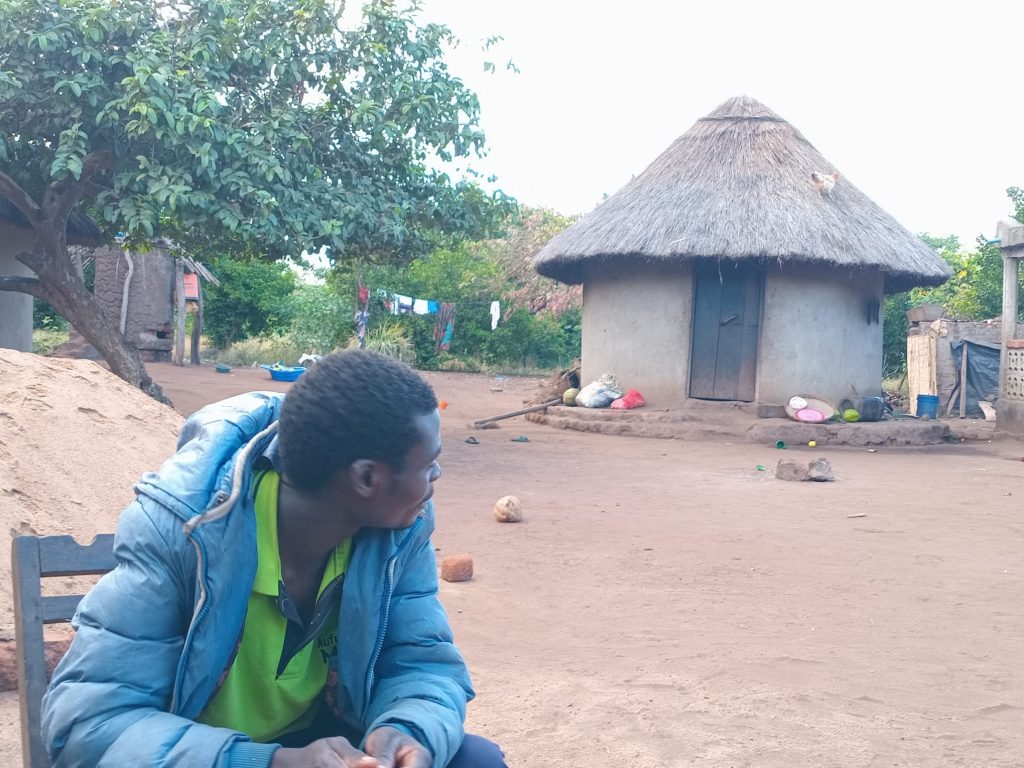
The collective kit also included essential tools: hoes, machetes, watering cans, and a motor pump. Despite fuel shortages, they found a creative solution. “We use the motor pump with Dad’s solar energy,” says Tendai proudly.
Their produce is sold at Guro market or directly at the machamba, where customers come to buy. Edson, meanwhile, highlights another important lesson: maize storage. “Before, we stored the whole cob. At the IAC we learned to shell it and store only the grains, which improves preservation.”
For these young people, the course has been a real asset. The results are already visible in the land they cultivate and in the enthusiasm with which they speak about the future. And behind it all, among the mountains surrounding the machamba, remains the watchful, experienced gaze of Mr Feniasse — a silent guide who continues to sow knowledge and hope.